The pattern every practice recognises
New patients phone in their lunch break, because that is when they are free. Your reception is at lunch, or the phones are stacked with recalls and the line is engaged, or the practice is closed on the afternoon they call. They get voicemail, or an engaged tone, and most of them do not leave a message or call back. They phone the next practice on the search results. That patient is gone, and nobody at your practice knows they ever existed.
The phone is a single channel with fixed hours and one line. The website is open all the time. The fix is to make the website able to do the three things the caller wanted.
1. Take the booking
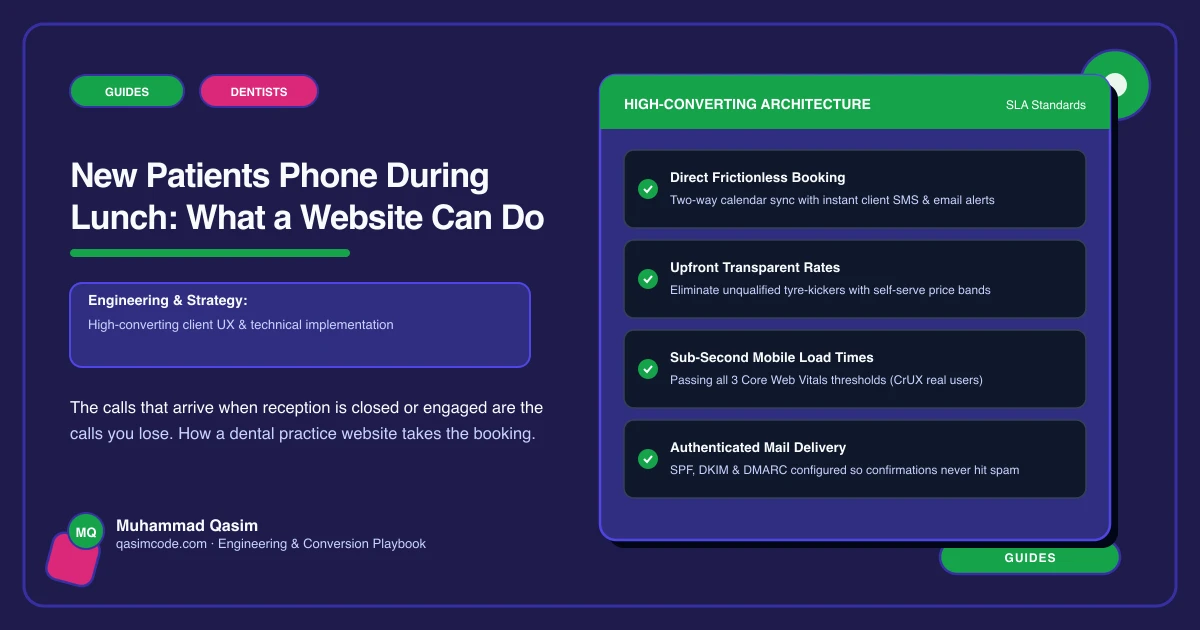
Most lunchtime callers want one thing: an appointment. If the website offers live online booking from the practice management system, the call was never necessary. The patient sees availability, picks a slot, enters name, mobile and email, and gets a confirmation. Done at 12:40 while reception is at lunch, and it is in the diary when they return.
What this needs: the practice management system's online booking configured to expose new-patient appointments (an exam and hygiene, an emergency slot, a consultation) with enough clinicians and slots; a Book button on every page visible on a phone; a flow that confirms immediately rather than "we'll call you". Most modern systems (Dentally, Software of Excellence, Dentrix Ascend, Curve, Open Dental) do this natively; older ones may need a booking layer.
Then tell callers. The voicemail message should say: "You can book online now at [site]/book, or leave a message and we'll call you back this afternoon." Half of the callers who were going to hang up will book instead.
2. Answer the question
The second most common lunchtime call is a question: do you take new patients, do you do implants, how much is a check-up, are you open Saturdays, do you have parking, do you take my insurance or plan. Each is a question the website should answer so plainly that the call is unnecessary.
What this needs: a fees page with real prices; a "new patients" page that says yes and what the first visit involves; a treatment page per service; opening hours in the header and footer; a practical-information section with parking, access and plans accepted; and an FAQ that answers the ten questions reception hears most, written by reception.
Ask the reception team to keep a tally for a week of what callers ask. The list is the content brief.
3. Capture the caller who still wants to talk
Some people want a human, or have a question the site cannot answer. For them, the site needs a way to leave their details that is better than voicemail.
A callback form. "Leave your name and number and we'll call you back before 5pm." Two fields and a preferred time. It goes to a monitored inbox and creates a task. It is more reliable than voicemail, easier for the patient, and it gives you their details in writing.
A tappable phone number everywhere, with the hours beside it, so the caller knows whether to expect an answer.
WhatsApp or SMS, if the practice can staff it. Many patients prefer to message. A "Message us" button with a stated response time works well for practices whose reception can respond between patients.
Live chat, only if someone will actually answer it. A chat widget that says "we're offline" is worse than no widget. A chatbot that answers the FAQ and offers the booking link can be useful; a bot that pretends to be a person annoys.
The operational side
The website capturing the enquiry is half the job; the practice responding is the other half.
- Callback forms answered the same day, with a named person responsible after lunch and after closing.
- Online bookings checked at the start of each session so a new patient who booked at lunch is expected and their intake form was sent.
- The voicemail and the engaged-tone message updated to mention online booking.
- A weekly number: online bookings made outside reception hours. This is the count of patients you used to lose.
What practices see
Practices that switch on live booking and update their voicemail typically find a substantial share of new-patient bookings arrive outside reception hours within the first month, at lunchtimes, evenings and weekends. Those were the calls that used to go unanswered. Reception also reports fewer question calls once the fees and FAQ pages exist, which frees the line for the callers who need it.
Where this sits
Making the website able to book, answer and capture is the core of how we build dental practice sites: booking integrated and confirming, the FAQ written from reception's tally, a callback form to a monitored inbox, and tracking that counts the out-of-hours bookings so the practice can see the calls it stopped losing.