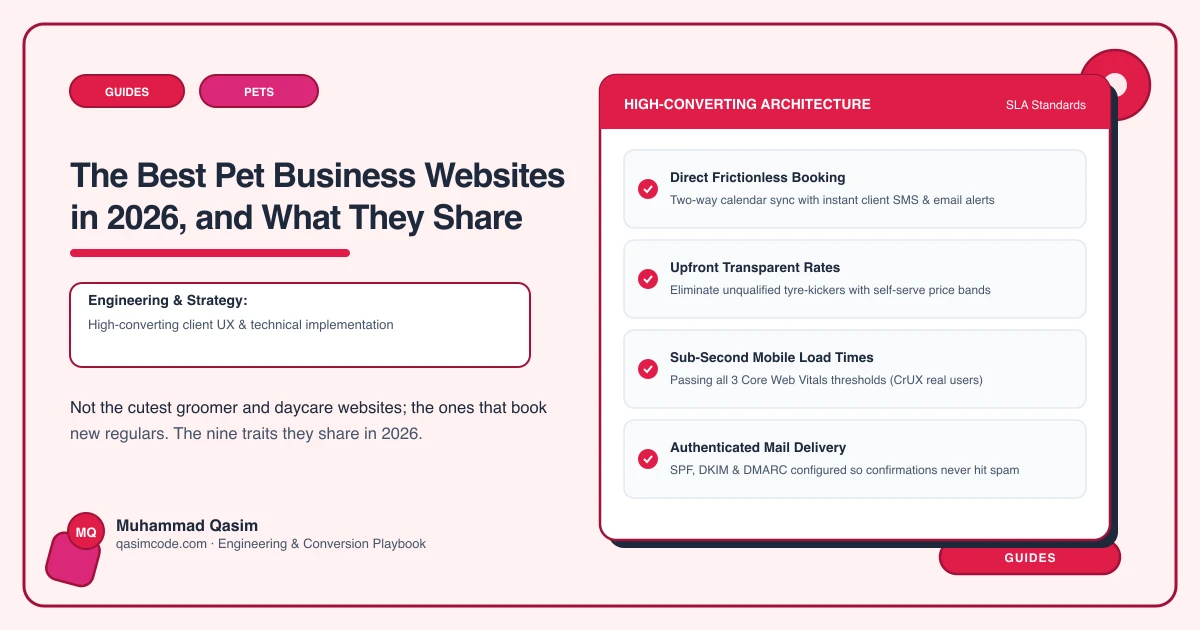
Best means booked, and trusted
Pet business websites compete on cuteness, and cuteness is easy. The best groomer, daycare, kennel and walker websites, measured by new regulars booked, share nine traits that answer the two things an owner is asking: what will this cost for my animal, and can I trust these people with them.
1. Prices by size and coat, on the page
A matrix, not a "from". Small, medium, large, giant; short, medium, long or curly coat; add-ons. Matching the platform's pricing, editable by the business. The owner of a cockapoo knows the number before they tap Book.
2. Book is one tap, with the service chosen
A Book button in the header on every page, deep-linked to the platform's booking with the service pre-selected, and a tappable phone number beside it. Owners search from the park.
3. Under two seconds on a phone
Photos sized and lazy-loaded, the hero prioritised, no slider. Passes Core Web Vitals on mobile.
4. A real premises tour
Every space an animal will be in, photographed as it is: kennels, play yards, the grooming room, the van, the overnight area. The team with their own animals. A day in the life. This is the most persuasive content a pet business can publish and most sites have none of it.
5. Vaccination, consent and intake handled before arrival
The platform's booking flow captures the pet profile, vaccination uploads and signed consent. A "before your first visit" page tells owners what is needed. The first visit starts on time.
6. A page per service
Grooming (with the matrix), daycare, boarding, walking, training, puppy classes, cat services: each with what it involves, who it suits, price, duration, what to bring, photos, FAQs and Book. These rank for "[service] [town]".
7. The nervous owner answered
Assessment and trial days, group sizes and how dogs are matched, supervision, overnight staffing, vet arrangements, illness protocol, updates and photos during a stay. Honest and specific, on a first-visit page and summarised on daycare and boarding pages.
8. Reviews and credentials beside the buttons
Google reviews pulled in with reserved space near Book on service pages; licences (boarding and daycare are licensed in many places), insurance, qualifications (grooming certifications, first aid, training accreditations) displayed with numbers and links.
9. Measured
Booking clicks, calls and enquiries by page and service; the platform's new-client source report; UTM tags on Instagram. The owner knows the daycare page produced twelve new trials last month.
What they do not share
- A look. Playful and bright; calm and premium; rustic and rural. All work.
- A platform. Gingr, MoeGo, PetExec, Time To Pet and others all appear.
- A large budget. Most are mid four figures.
- Many pages.
Check yours
On your phone, mobile data, private window:
- Find the price of a full groom for a medium curly-coated dog. Under thirty seconds?
- Tap Book without scrolling. Is the service pre-selected? Does it ask for the pet?
- Load time under two seconds?
- Find photos of your actual kennels or grooming room.
- Find what vaccinations you require and how consent is given, before booking.
- Search your main service plus your town: page one with a service page?
- Ask whoever runs the desk how many bookings the site produced last month, by service.
Seven passes is one of the best. Most pet sites pass two.
Where this sits
The nine traits are the specification for the pet business websites we build and the checklist a diagnosis runs an existing site against. The cuteness is welcome; it goes on top of a structure that has already answered the owner's two questions.