A tutored child is terms, not hours
One new tutoring family is not one sale. A child who starts in year five for maths often stays through the transition, sometimes through GCSEs, sometimes brings a sibling. Thirty or forty sessions a year, for years, from one enquiry.
That changes the maths on a website. The question is not what the site costs, it is how many families it enrols per month against what the build cost once. Here is how the two options compare on that.
The template
An education theme with your logo, an about page, a list of subjects, a contact form and maybe an email address for a trial.
Cost: hundreds to low thousands.
Good at: existing, looking tidy, and going live in a week.
Weak at: ranking for anything more specific than your own name, because one Subjects page cannot answer "GCSE maths tutor" and "year two phonics" at the same time. Also weak at stating fees, at getting a trial into a diary without an exchange of emails, at making vetting visible, and at saying anything concrete about progress.
The custom build
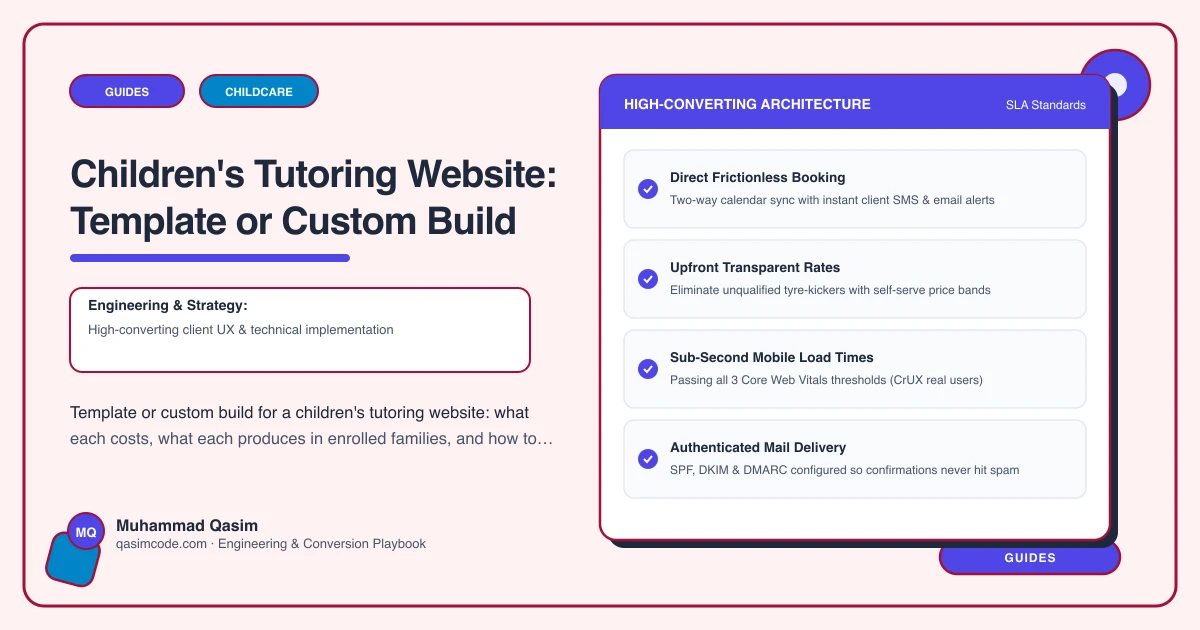
Built around the sequence a parent actually follows: search for the subject and the age, judge whether these people are safe and competent, work out what it costs, book a trial.
A page for each subject and age band. A how sessions work page with length, frequency, location and what happens when a child is ill. Vetting and safeguarding on its own page in plain words. Fees per session and per term as editable records. Trial booking through TutorBird, Teachworks, ClassForKids or Acuity, embedded and deep-linked. Tutor profiles. A stated progress reporting route. Online session safety if you teach remotely. Parent reviews near the buttons. Fast on a phone, structured data, tracking, everything in your name.
Cost: mid four figures, fixed.
Good at: being found by parents who do not know your name, answering the two questions that stop them, and getting a trial booked the same evening.
Weak at: the invoice, and two to three weeks of your attention.
Where the extra families come from
Subject and age pages. "Maths tutor" plus your town, "eleven plus tutor", "GCSE English tutor", "primary reading help" are four different parents in four different situations. A single Subjects page ranks for none of them and speaks to none of them. This is the largest single difference between the two builds.
Fees stated. A parent budgeting for a weekly session for a year will not send an email to find out the hourly rate. They will read the site that published it. Per session and per term, because the term figure is the one that decides whether it is affordable.
Vetting where they will look. The parent's private question is whether it is safe to leave their child with you. A visible page naming your background checks, your policy and your practice answers it without them having to ask, which most parents will not do.
The progress answer. Parents are buying an outcome they cannot observe. A site that says exactly how and how often they will hear about it converts the ones who have been let down before.
Trial booking in one tap. The gap between deciding and acting is where most tutoring enquiries die. A form that promises a reply within two working days loses to a diary that shows Tuesday at five.
The arithmetic
A tutor with a template site getting 250 visits a month, converting 3 percent to an enquiry, half of those becoming families, gains three or four a month.
A build that ranks for four or five subject and age searches, states fees and books a trial in one tap might reach 500 visits at 7 percent, which is closer to seventeen enquiries and eight families. Even at a third of that uplift, families who stay for terms rather than hours clear the difference between the two builds inside the first year.
When the template is right
- A solo tutor with a full diary and a waiting list.
- Someone tutoring part time around another job with no wish to grow.
- A first year business still working out which subjects and ages they want.
When the template is a leak
- Parents email to ask what you charge, and half of them never reply to your answer.
- You want eleven plus or GCSE work and there is no page about either.
- The site takes over three seconds on a phone.
- Nothing on the site says how you are vetted.
- Trials are arranged by three emails and a phone call.
- You cannot edit fees yourself before the September increase.
- The domain or hosting is in the previous developer's name.
Deciding
Get three numbers. Monthly visits. Monthly enquiries from the site. What one family is worth to you over two years, counting siblings. If the site converts under 4 percent, or cannot show a fee, or has no page for the subject that pays your rent, a custom build pays for itself in enrolled families rather than in tidiness. If it is fast and converting, keep it and spend the money on subject pages and a proper safeguarding page instead.
Where this sits
Our children's tutoring websites are custom builds at a fixed price, with subject and age pages, fees, vetting and embedded trial booking included, because that is the version that enrols families. The same structure sits behind the other childcare and family websites we build.