The symptom
The site gets visitors. You can see them in the analytics. What you do not see is trials in the diary. What you get instead is the occasional email asking what you charge and whether you have any space, sent at half past nine at night, which you answer the next afternoon and hear nothing more about.
On children's tutoring sites we look at, the cause is on this list, usually three or four at once. Work through them in order. The first three are the route from a worried parent's search to a trial in your diary.
1. Everything is written to the student
Pages that say "improve your grades" and "book your session" are addressed to a fourteen year old who is not reading them and would not be paying if they were. The parent skims past copy that is not aimed at them and cannot find the answer to anything they came for.
Fix: rewrite the home page and every subject page to the parent. Their child's situation, not the student's aspiration. What you do about confidence as well as marks. What the parent will be told and when. Keep the child's voice for a page about what a session is like, where it belongs.
2. Fees are not on the site
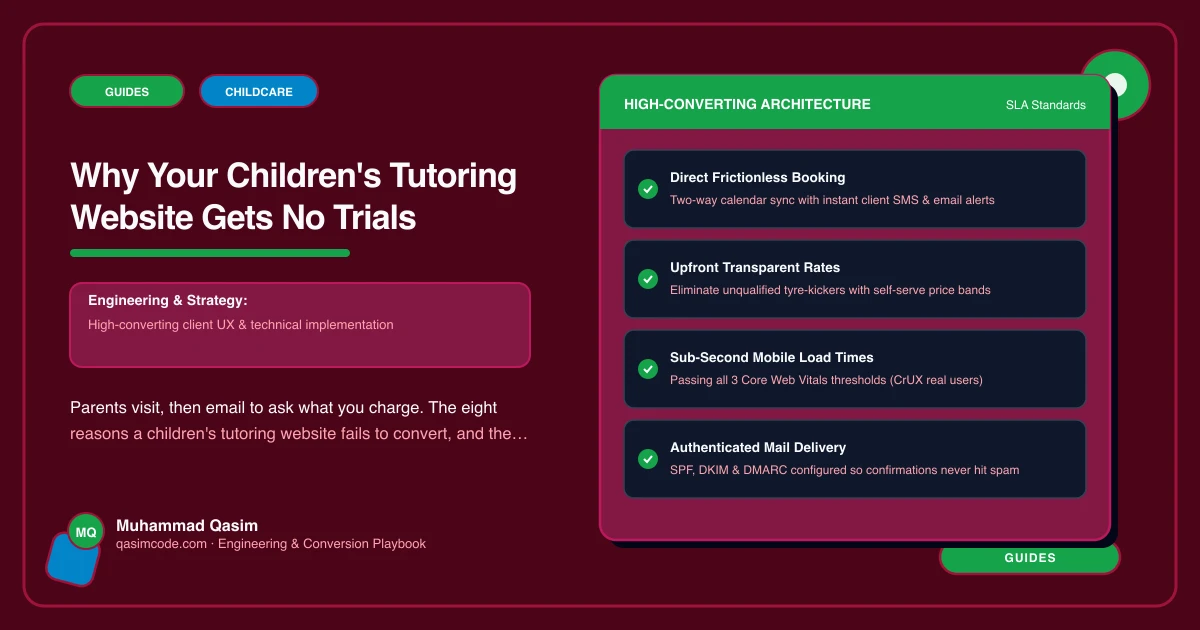
"Contact for prices" is the second biggest leak. A parent working out whether a weekly session is affordable will not open an email thread to find out. They will read the tutor who published a number.
Fix: fees per session and per term, by age band or session length if they differ. Say plainly what is included, whether materials are extra, and how billing works, monthly or by the term. Hold them as editable records so September's change takes you ten minutes.
3. Booking a trial takes three emails
A contact form that promises a reply in two working days loses to a diary that shows Tuesday at five. Parents decide about tutoring in short bursts, usually after a difficult evening of homework, and the intent does not survive a delay of days.
Fix: a Book a trial button in the header on every page, deep-linked into TutorBird, Teachworks, ClassForKids or Acuity with the subject and age already chosen. Ask for very little at that first step: child's first name, year group, subject, parent contact. Everything else after the trial is booked.
4. There is one Subjects page
"Eleven plus tutor" plus your town, "GCSE maths tutor", "primary reading support" and "A level chemistry" are four searches by four different parents. One list of bullet points ranks for none of them and reassures none of them.
Fix: a page per subject and age band. What you cover, which exam boards or curriculum stage, what a typical term looks like, who it suits, the relevant fee, the tutor who teaches it, and its own trial button.
5. Vetting is invisible
The parent's real question is whether it is safe to leave their child with you, and almost none of them will ask it out loud. If the site does not answer it, they assume the worst and go quiet.
Fix: a vetting and safeguarding page, linked from the main menu, that names the background checks you and your tutors hold and when they were done, your safeguarding policy and who the named person is, whether sessions are one to one or in view of others, and what your practice is on contact with children outside sessions. Requirements differ by country, so state what applies where you operate and be exact rather than vague.
6. Nothing says how parents hear about progress
A parent is buying something they cannot watch. If the site is silent on reporting, the only mental model they have is handing money over and hoping.
Fix: one short section, repeated on subject pages, saying exactly what they get: a note after each session, a written summary each half term, a call at the end of term, a portal login, or whatever you actually do. Concrete beats generous. Do not promise a report you will not have time to write in November.
7. Online sessions are mentioned without the safety
If you teach remotely and the site just says "online available", cautious parents drop out at that line rather than ask about it.
Fix: say which platform, whether sessions are recorded and who can see the recording, whether a parent is expected in the room or nearby, how the link is issued and to whom, and what happens with screen sharing and shared documents. This paragraph converts.
8. Nobody knows what the site produced
Without trial bookings, enquiries and call taps recorded by page, you cannot tell which of the other seven is costing you the most.
Fix: events for trial booking clicks, form submissions and call taps by page and subject, plus your platform's new-enquiry list, and ten minutes looking at it once a month.
The order
One, two and three are the route from a parent's search to your diary and hold nearly all of the loss. Five, six and seven are trust, and they decide the cautious parents, who are most of them. Four is how strangers find you at all. Eight is how you know which to fix next.
Where this sits
This is the conversion list every children's tutoring website we build gets tested against, and the first half of a diagnosis on a site you already have. It runs the same way across the other childcare and family businesses we work with, but for tutoring the shift from writing to the student to writing to the parent is almost always the fix that changes the enquiries first.