The gap between 10pm and 3pm
Parents look for a nursery after their child is asleep. They find your site at ten, want to see the toddler room, and the only route is a phone number. The office opens at half past seven with children arriving, listens to messages at eleven, and returns the call at three. In the seventeen hours in between, the parent has booked a show-round with a setting whose calendar was open.
The waitlist is the same failure one stage later. A family asks to be added, someone writes it on a pad, and when a place comes up in the toddler room in January nobody is certain who asked first or whether they still need it. Both problems are the same problem: a single channel that only works when a member of staff is free.
Design the show-round slots around the nursery day
The reason nurseries resist online booking is a real one. You cannot have strangers walking through the baby room at drop-off, and the manager cannot be pulled off the floor at will.
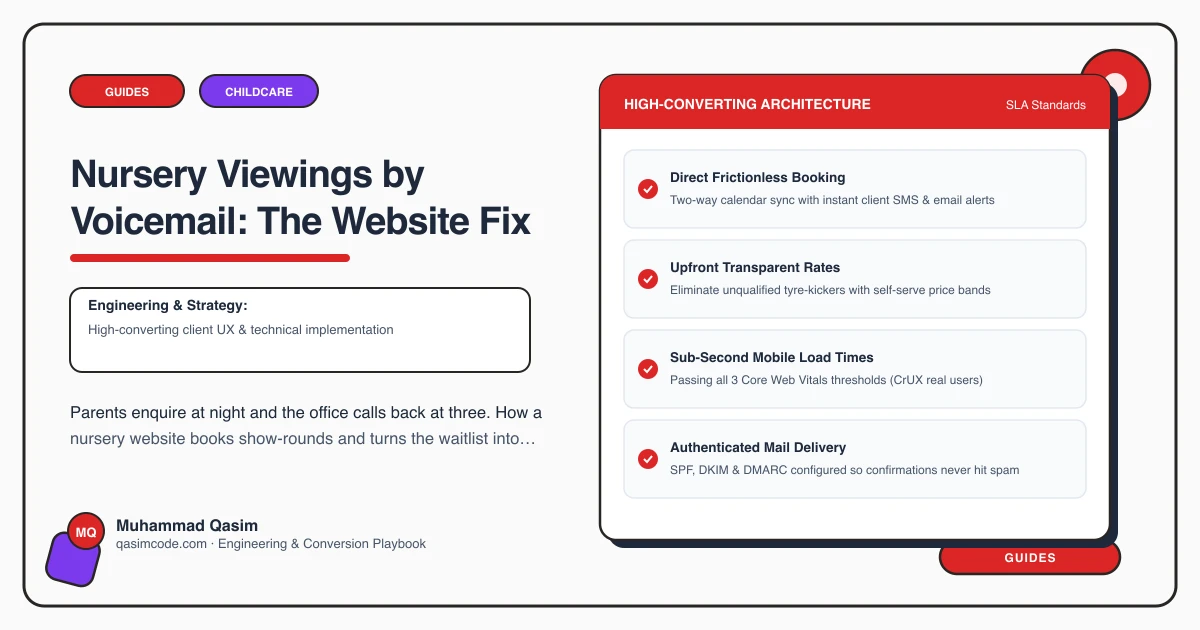
So decide the slots deliberately, then publish them. Most settings land on two or three afternoon slots on set days, after lunch and around the end of nap, when the rooms are settled and the manager is not counted in ratio. Twenty to thirty minutes each, with a buffer between them, and a cap of one family per slot. Block the last two weeks of August if that is your busiest transition period. Publish those slots and nothing else, and you have removed the negotiation without losing control of the floor.
Which tool: if your nursery software books tours and records the visit against the enquiry, use it, because the viewing and the enquiry stay one record. If it does not, Acuity or Bookeo embed cleanly and handle the calendar, buffers, confirmations and reminders. Confirm what your platform supports rather than assuming.
The form: parent's name, phone, email, child's name and date of birth, sessions wanted, preferred start, and one free line for anything they particularly want to see. The room pre-selected if they arrived from a room page. Nothing else.
The confirmation does the office's job
Written once, sent every time. The date and time. The address with parking, the buggy store and which door to use. How long the visit takes. Who they will meet, by name. What to bring, which is usually nothing, so say so. A link to the fees and funding page, so the numbers are read before the visit rather than sprung during it. And a reminder the day before, which is what stops the empty slot.
A waitlist that forecasts a room
Join the waitlist is a short form: child's date of birth, sessions wanted, preferred start, parent's contact, and whether they have a sibling with you. It lands in Famly, Blossom or Kinderly as an enquiry.
The date of birth is the field that matters, because it tells you which room and roughly when. With it, the list becomes an occupancy forecast: how many toddler places you need in January, and who is waiting for them, in date order.
The acknowledgement: you are on our list for the toddler room from January, we review places monthly and will be in touch as soon as one is likely, fees and funded hours are here. A parent who knows what happens next does not ring to check.
The monthly review: the list against your room forecast, in date order, everyone either offered a place or told they are still waiting. That habit is what the form makes possible, and it is worth more than the form.
After the show-round is where places are won
The same day, not the following week. A message with the fees for the sessions actually discussed, the funding position for that family, what the first invoice will look like, a settling-in plan, and how to accept. Give the offer a sensible deadline and say what happens if they miss it. Then enrolment through the software, so registration, consent, medical details and payment set-up are completed once and nothing sensitive travels by email.
Nurseries that do this on paper lose families in the gap, usually to a setting that answered faster rather than a better one.
Give the caller something better than voicemail
Some parents want a conversation, and the fallback should still move them forward.
The message: you have reached the nursery, we are with the children. To book a show-round, go to the website and tap Book a viewing, slots are shown live. To join the waitlist, the form is on the same page. For fees and funded hours, everything is under Fees and funding. Otherwise leave a message and we will call after two.
A callback form: two fields, name and number, with the time you will call. For the parent who would rather talk.
Count it
Track viewing bookings, waitlist joins and call taps by page and by hour. Two things usually fall out. A large share of activity arrives after eight in the evening, which is exactly when nobody was answering. And one or two room pages produce most of the bookings, which tells you where the next set of photographs should go.
Then track the rest of the funnel in your software: enquiry to viewing, viewing to offer, offer to start. Once those four numbers exist, decisions about the website stop being decisions about taste.
Where this sits
Show-round slots designed around the nursery day, a waitlist landing in your platform with the date of birth attached, the confirmation and offer templates and tracking on all of it are part of every nursery and daycare website we build, and the pattern repeats across the other childcare websites we work on. The 10pm parent is not going away. The website's job is to be the thing your voicemail can point at.