A consultation is not a check-up
A hygiene appointment needs a name, a time and a recall date. A cosmetic or implant consultation needs more before the patient sits down: what they want changed, how long they have been considering it, whether they have had orthodontics before, whether they are a smoker, whether they want to discuss finance, and ideally two photographs taken on their own phone.
The slot is longer, it is often with a specific clinician, it may be paid, and it may be by video for someone travelling from another city or another country. Your website's only job is to get that patient into whichever system runs your diary, with that information attached.
Below is how the platforms in common use look from the website's side. Features change, so confirm specifics with the vendor before you build round them.
Dentally
For: UK practices on cloud software.
Website side: patient-facing online booking, so the site can link straight into an appointment type rather than a contact form.
Consultation fit: appointment types per treatment mean a veneer consultation and an implant assessment can be separate things with separate durations and separate clinicians. Recalls and messaging handle the follow-up.
Watch: the richer intake, photographs and treatment-plan conversation usually happen alongside it rather than inside the booking widget. Confirm what the online booking flow itself can capture.
Software of Excellence
For: established UK and international practices, often with several surgeries.
Website side: patient engagement and online booking modules that sit on top of the practice system.
Consultation fit: strong on recall, reactivation and campaign messaging, which matters because cosmetic patients often enquire months before they commit.
Watch: modules are licensed separately. Ask specifically which one provides the public booking link the website will use.
Dentrix and Dentrix Ascend
For: US practices.
Website side: online scheduling and patient communication through the vendor's own tooling and a partner ecosystem.
Consultation fit: appointment types and provider mapping are the useful part. Consult slots can be routed to the clinician who places the implants.
Watch: in the US, anything collecting health information needs the appropriate agreement in place with the vendor. That is a question for your own compliance adviser, not for a web developer.
Curve Dental
For: cloud-first practices in the US and Canada.
Website side: online booking and a patient portal.
Consultation fit: works well where you want the whole record in one cloud system rather than a stack of add-ons.
Jane and Cliniko
For: clinics running cosmetic or implant work alongside other clinician-led services, and for practices that want video consultations as a first-class appointment type.
Website side: both offer public booking pages and embeddable booking, with per-practitioner and per-service links.
Consultation fit: this is where they earn their place. Paid appointments, deposits, intake forms attached to a specific appointment type, and integrated video consultations are standard rather than bolted on.
Watch: neither is a dental practice management system. Clinics often run one of these for the cosmetic consultation funnel and their main dental system for treatment, which means one patient exists in two places. Decide deliberately who reconciles them.
What the website needs from any of them
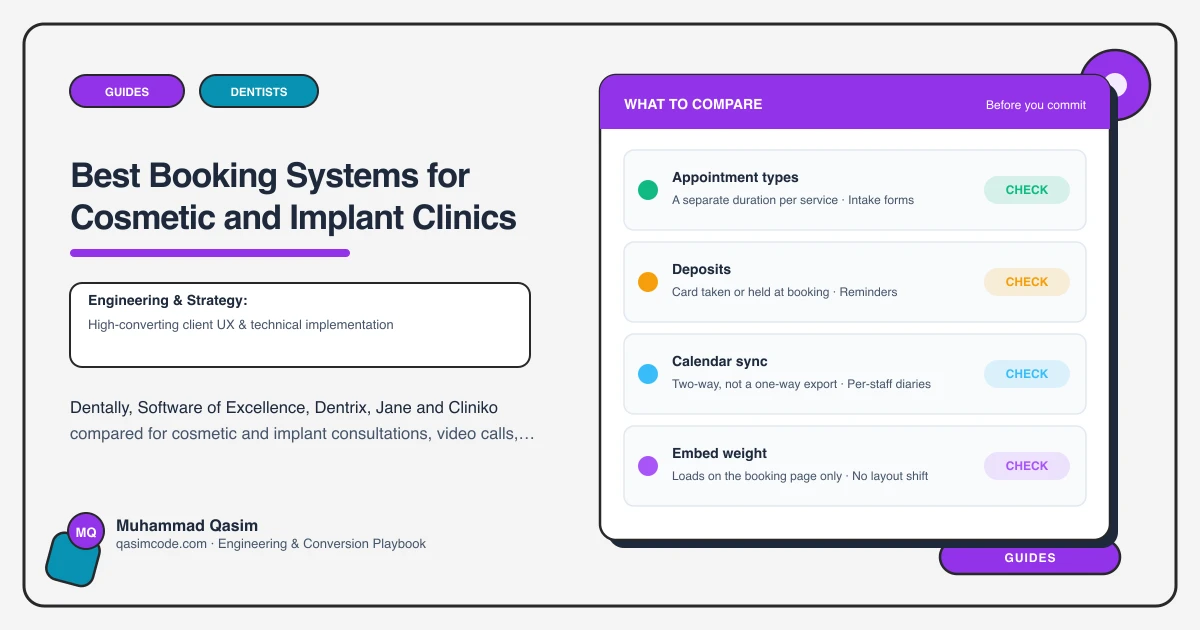
- A separate appointment type per treatment, so a whitening enquiry and a full-arch enquiry do not land in the same twenty-minute slot.
- Deep links, so the Book button on the veneers page opens the veneer consultation already selected.
- An intake form attached to the appointment, asking the few things that make the consultation useful.
- A video option for distance patients, with the joining link in the confirmation.
- A deposit or card on file for paid consultations, with the cancellation terms written in plain words on the page.
- Confirmations that carry your clinic's name, address, parking and what to bring.
- Speed. A heavy embed under a heavy gallery is how a cosmetic site ends up at four seconds. Hosted booking pages are usually kinder on mobile than embeds.
- Tracking of booking clicks and call taps by page, so you can see whether the implants page or the finance page fills the consultation diary.
Choosing
- UK practice, cosmetic work inside a general practice: Dentally or Software of Excellence, with the site deep linking into consultation appointment types.
- US practice: Dentrix or Curve, with online scheduling turned on and consults routed to the right provider.
- A dedicated implant or smile clinic where the consultation is the product: Jane or Cliniko for the consultation funnel, accepting the two-systems trade-off.
If what you run today works for your front desk, keep it. Changing practice software to improve a website is almost always the wrong way round.
Where this sits
Wiring whichever system a clinic runs into the treatment pages, with the right appointment type and intake behind each button, is a standard part of a cosmetic dentistry and implant clinic website, and the same booking pattern runs through the other dental practice websites we build. Packages are on pricing. The system holds the patient record. The site's job is to get them into it before they open the next clinic's tab.