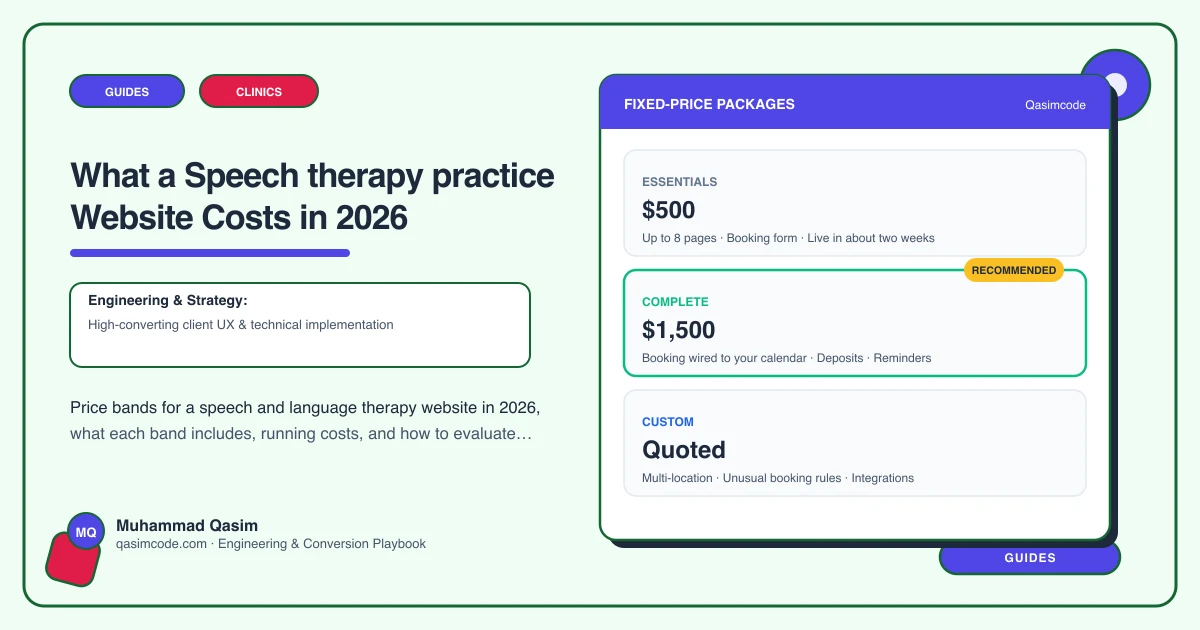
The question that sets the price
Two speech and language therapy practices can ask for the same website and be quoted differently, and the reason is almost never the design. It is whether one therapist is publishing one caseload, or whether several therapists, an adult service and school contracts each need their own route through the site. Page count follows from that answer rather than driving it.
A solo therapist: Essentials at $500
Working alone, Essentials is the honest buy: eight pages, two rounds of changes, roughly a fortnight from brief to live. Eight is enough for everything this practice needs the site to do —
- a first screen naming the concerns you take on, in a parent's words
- two or three pages for the areas that fill most of the diary
- an assessment page, because that is the call you field most weeks
- fees for assessment and for sessions
- your own profile, registration included
- contact
A therapist whose enquiries arrive from parents needs nothing past that. Buying more usually means paying for a school-referral arm months before any school has been in touch.
Several therapists or school contracts: Complete at $1,500
Complete stretches to twenty pages across about four weeks, with four rounds of changes, and booking connected to the diary rather than dropped into an inbox. In a speech practice those extra pages have obvious homes —
- one page for every area of work, not only the three busiest
- an adult service kept apart, because a man relearning speech after a stroke and the parent of a three-year-old arrive from different searches
- a route for schools, nurseries and settings: what you deliver on site, and how a setting instructs you
- registration and specialisms on each therapist's own profile
- a fees table you can edit yourself, covering blocks and off-site work
What the booking work covers
On a new Complete build that work sits inside the price: the system chosen around how your diary actually runs, hooked to the Google or Outlook calendar you already keep, Stripe handling deposits, reminders going out, and the confirmation email tested so it reaches an inbox rather than a spam folder. Bolting booking onto a site that already exists gets a quote inside a day and takes roughly a week.
The software bill stays yours either way, paid straight to Cliniko, Jane, Zanda, Power Diary or WriteUpp.
When a site already exists
Nobody should price a rebuild before establishing whether the current site is salvageable. $299 buys a Diagnosis with the report back inside three days: what is wrong in plain words, the cost of each repair, and whether repairing beats starting over. Diagnosis with the fix included is $799 and about a fortnight of work. A rebuild gets priced after that report, not ahead of it.
What continues after launch
- the domain, renewed yearly in the practice's own name
- practice software, still billed direct
- hosting
- monthly care, if updates, backups and small edits should stop being yours: Basic $99/mo; Growth $249/mo, four hours of changes included; Scale $499/mo
Five things that move the number
- how many areas of work get published, since each is a page and a separate search
- whether the practice sees adults, which is effectively a second site inside the first
- whether schools and nurseries commission you, and whether they need an enquiry route of their own
- the number of therapists needing a profile and a bookable diary
- whether fees are one assessment price or a full table of sessions, blocks and visits
Not one of those is a visual decision. A quote that climbs because the layout got more elaborate is measuring something that will not bring a single extra parent to the assessment page.
Where this sits
We build speech and language therapy websites to exactly that shape, for a fixed fee. Where the existing site is the real problem, read why a speech therapy site takes no bookings first, or spend ten minutes on the six-check phone audit.