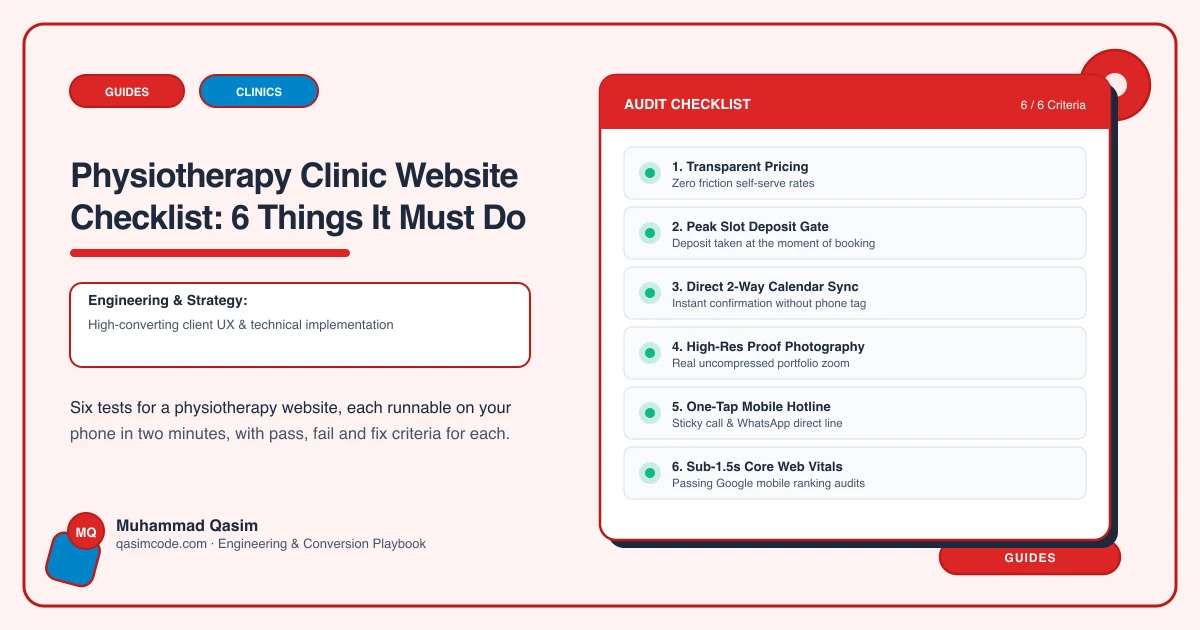
Six tests, ten minutes
Someone in pain does not research a clinic. They book whoever has a slot soon and tells them what will happen. Run these on a phone, on mobile data, and score each pass or fail.
1. Book a first appointment without speaking to reception
The test: book a new-patient assessment for this week.
Pass: live availability from your clinic software, the correct longer slot for an initial assessment, an intake form sent in advance, and a reminder confirmed.
Fail: a contact form, or a booking that offers only follow-up length slots.
The fix: embed Cliniko, Jane, Nookal, Power Diary, Zanda or TM3 and style it to match the site. Reception should be taking the bookings that need a human, which is a small minority of them.
2. Choose a physio, not a clinic
The test: if you have four physios, work out which one treats runners.
Pass: a page per practitioner and per location, each with what they treat, how they work, their registration, and a button that books them.
Fail: a team grid of headshots and first names.
The fix: a page each. Patients arrive wanting a person, and each page is also a search result for that name and that speciality.
3. Be found for the thing the patient has
The test: search "shoulder physio" plus your town, then "running injury physio" plus your town.
Pass: a condition page for each of the problems you treat most, in plain words — what it is, what the first visit involves, how many sessions is typical, and a booking button.
Fail: one "conditions we treat" list with twenty items and no pages behind them.
The fix: write the six you see most. Nobody searches for your clinic name; they search for their symptom, and a page per condition is a page per search.
4. State fees and insurers on one page
The test: find the price of an initial assessment and whether you take a given insurer.
Pass: private fees, the insurers you are recognised by, and how claims work — all on one page.
Fail: "please contact us for fees", which for a self-pay patient comparing three clinics is a reason to close the tab.
The fix: one fees page, honestly written, including what a follow-up costs. Insurance recognition is a strong differentiator and most clinics bury it.
5. Load in under two seconds in a car park
The test: on mobile data, count until the booking button is usable.
Pass: under two seconds.
Fail: a hero video, a slider of treatment photography, or a chat widget on every page.
The fix: one compressed image, no slider, booking script on tap. This matters more here than in most trades: the address gets checked from a car outside, on one bar of signal.
6. Show the classes, if you run them
The test: look for your Pilates, rehab or falls-prevention timetable.
Pass: the timetable embedded from the same software as the appointments, bookable and priced.
Fail: a PDF, or a note saying to ring for times.
The fix: embed it from the tool you already use. Classes are the highest-margin hour in a physio clinic and the easiest to fill from a page that shows live spaces.
Scoring
Six passes and the site is doing its job; spend on advertising instead of rebuilding. Four or five, fix the failures in order. Three or fewer and the structure is wrong — almost always the missing condition pages and the missing page per physio, which are the two that bring in new patients.
Where this sits
Our physiotherapy websites are built to pass all six at a fixed price. The wider clinic version is on the clinics page. What you may claim about treatment differs by country and regulator, which the country pages cover.