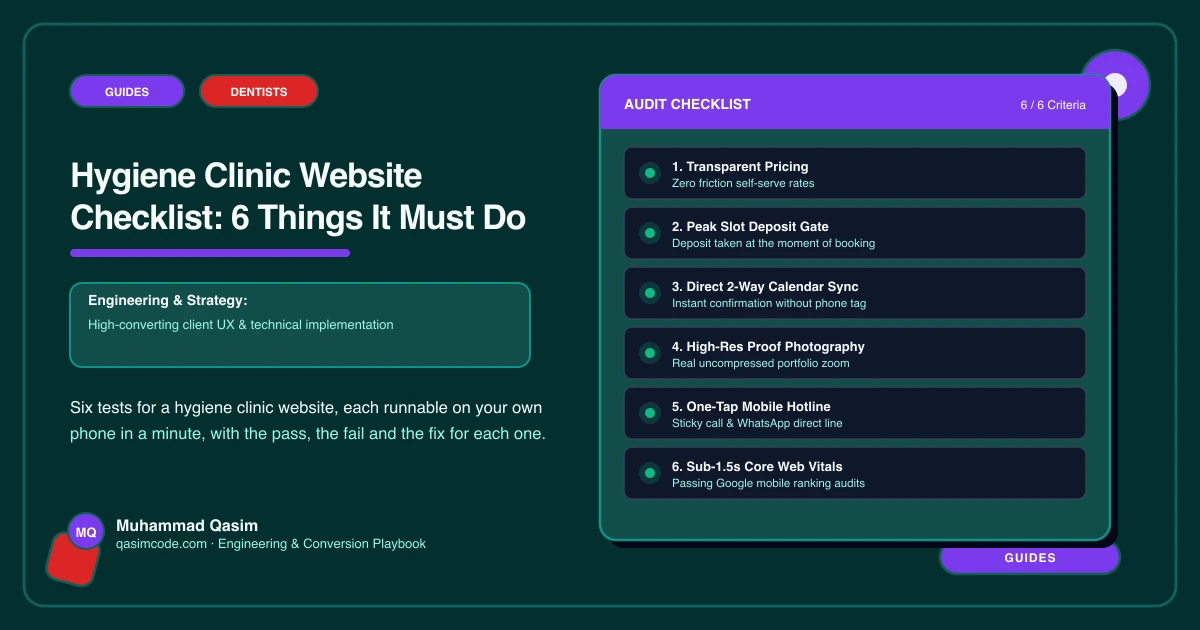
Six must-haves, six things you can do
Walk out of the surgery, off the wifi, and open your own site in a private window on mobile data. Each test is something a patient physically does before deciding you are their hygienist. Note which fail: which one failed matters more than how many.
1. Read the first screen aloud, then stop talking
The test: read out only what is visible before you scroll, then stop. Does a stranger now know they can book without their dentist sending them?
Pass: the sentence saying so is inside what you read, beside the booking button.
Fail: you kept explaining after you stopped, or the answer sits in paragraph three of an About page.
The fix: write that line against your own regulator's current position, since what is permitted differs by country. Where something is required first, name it and have the booking flow collect it.
2. Book yourself in, then look six months ahead
The test: book a returning-patient slot in your own tool, then look at what it queued for your interval.
Pass: a recall is waiting, and its link opens real dates in one tap.
Fail: the appointment is there and nothing sits behind it.
The fix: switch the recall on, set the interval, and read the message aloud before enabling it. It is the most valuable text on a hygiene site and usually the vendor's default.
3. Put the site's price beside the diary's price
The test: find the figure on the site, then what your booking tool charges for that visit tonight.
Pass: they agree, and there is a figure per visit type, not one number for everything.
Fail: "prices on request", a fees PDF, or a number your last review moved in one place only.
The fix: hold prices as records you edit, one per visit type, so a review is a field you change and not a developer you chase.
4. Hand the page to someone who has never chosen a hygienist
The test: give them the page about the visit, take it back, then ask how long they are in the chair, what happens in it, and what the rest of the day looks like.
Pass: they answer all three without looking again.
Fail: they can only repeat the name of the appointment.
The fix: describe your process rather than offering guidance, and send anything reading like a symptom to an appointment, not an answer.
5. Try to join your own plan
The test: on a phone, get from the home page to paying for your membership.
Pass: what it includes, what it costs monthly, what it saves against paying per visit, and a sign-up landing in your payment tool.
Fail: "plans available, ask at reception", linking to nothing.
The fix: one page, plainly written, with the sign-up button beside the explanation.
6. Count out loud to two
The test: on mobile data, open the home page, then one inner page, counting as each loads.
Pass: you are still on "two" when the text is readable and the button is tappable.
Fail: a white screen, then a carousel of stock smiles, a photograph at a time.
The fix: compress the photographs, let the hero load first, delete the carousel, move off the cheapest hosting tier.
Scoring
Test 1 is the gate: somebody who believes they are not allowed to book never reads anything else, so nothing downstream rescues that failure. Fix it first: an afternoon of writing, no build time.
Test 3 decides whether they act tonight or ring three clinics tomorrow. Test 2 is the only one that compounds: pass it and this year's patients become next year's diary. Re-run all six after any fee review and after any update that touches the booking embed.
Where this sits
Every dental hygienist website we build is meant to pass all six, at a fixed price. For what a build comes to, read what a hygiene clinic website costs. Ordered by what each failure costs, the same ground is in why your hygiene clinic site gets no bookings. Orientation on the website, not advice on scope of practice.