You are paying for pages that are search results
A physiotherapy site has a page-count problem that is actually a search problem.
People do not look for your clinic. They look for "shoulder physio" or "running injury physio", and they look for a named practitioner once someone has recommended one. Each of those is a page, and each page is a separate way to be found. A site that covers conditions in a single list and practitioners in a grid of headshots has one entry point where it could have twenty.
That is the whole argument for spending more than the minimum here.
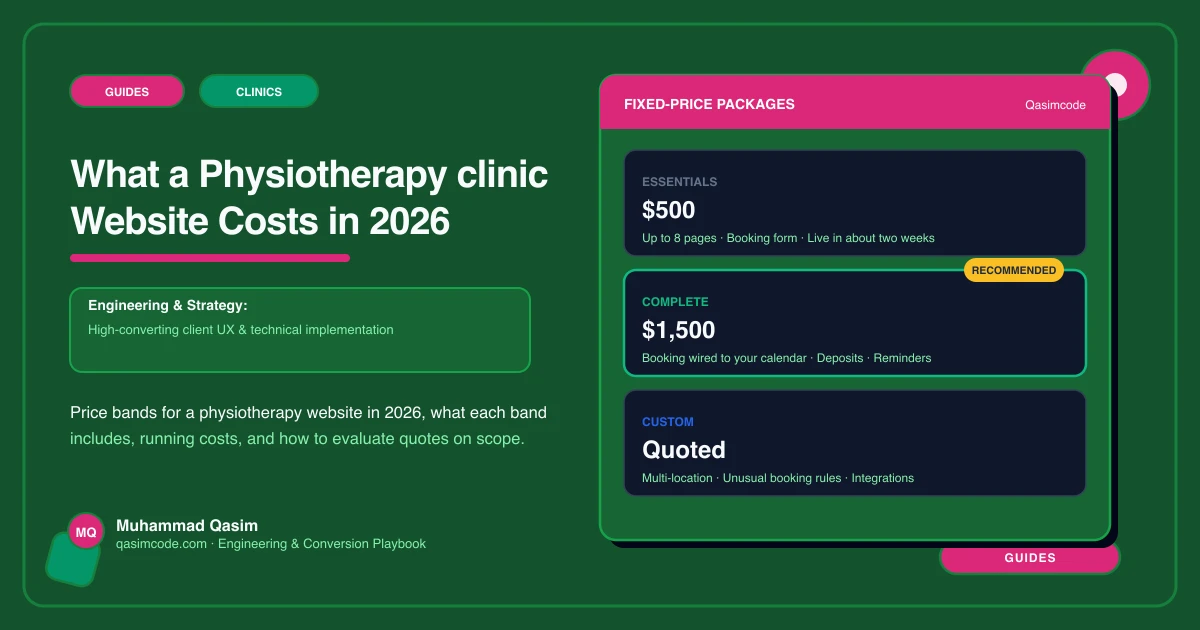
The recommended build: Complete at $1,500
Twenty pages, about four weeks, four rounds of changes. The room goes on:
- A page per condition in plain words, each ending in a booking button
- A page per physiotherapist and per location, each with its own booking link
- Fees and recognised insurers on one page, with how claims work
- A class and rehab timetable if you run them, embedded from the same tool
- Booking embedded from your clinic software, styled to match, with reminders and intake forms
Self-referral belongs on the first screen
A detail that costs nothing and is missed constantly: in most countries a patient can self-refer to a private physiotherapist, and many do not know it. Saying so on the first screen removes a hesitation that otherwise ends the visit.
Where insurance or a public scheme does require a referral, the site should say that too, on the fees page rather than buried in an FAQ.
Fees and insurers earn their page
Listing what a first appointment and a follow-up cost privately, which insurers you are recognised by, and how a claim works removes one of the two most common reasons someone rings instead of booking. It is a single page and it does more than most of the site.
Where Essentials at $500 works
A single physiotherapist at one location, with conditions covered on one page: eight pages, about a fortnight, two rounds. Online booking is still included. What you give up is the per-condition coverage, which is the part that brings traffic — so treat it as a first version rather than a finished one.
Multi-site groups go past Complete into Custom, because a location that shares a diary but not a price list needs its own logic.
An existing site
Diagnosis is $299 with a report in three days: what is broken, the cost of each fix, and a straight answer on repairing or rebuilding. Diagnosis and fix is $799 over about two weeks.
Monthly, after launch
- Domain, renewed yearly in your own name
- Clinic software, paid direct to Cliniko, Jane, Nookal, Power Diary, Zanda or TM3
- Hosting
- A care plan if fee changes, new practitioners and class timetables should be maintained for you: Basic $99/mo, Growth $249/mo including four hours of changes
What changes the quote
- How many conditions get their own page
- How many physiotherapists and locations need profiles
- Whether classes and rehab groups need a bookable timetable
- Whether insurer claims need explaining in detail
- Which country's advertising rules the copy is written to
Where this sits
We build physiotherapy clinic websites around condition and practitioner pages at a fixed price. For the conversion audit of a site you already have, read why your physiotherapy website gets no bookings.