The two-sided studio is the cost question
A physio-led Pilates studio sells two things through one website: an assessment with a clinician, and a place in a class. What the build costs tracks how much of that second side the site has to carry. A studio that books assessments and lets the classes fill by word of mouth needs a small site. A studio whose income is packs and memberships needs a timetable, a pricing shelf and a purchase flow, and that is a different number.
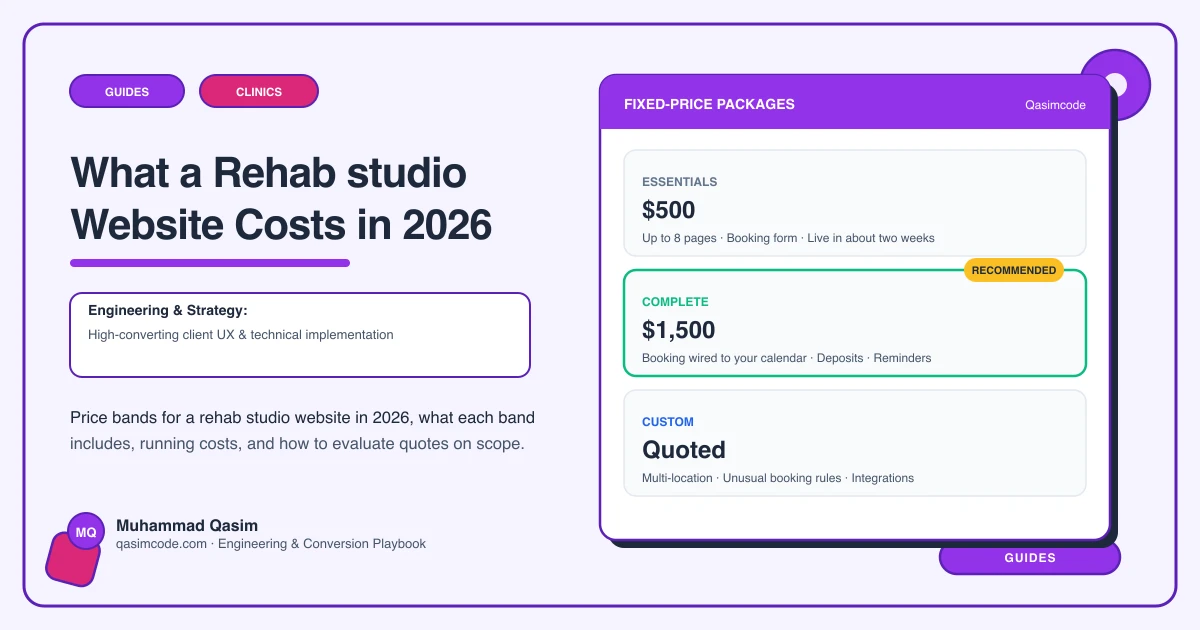
Assessments only: Essentials, $500
Essentials runs to eight pages, two rounds of changes, and roughly two weeks from brief to live. For a rehab studio that buys: a first screen naming who the studio is for, a page on the assessment and what a first visit involves, one page introducing the classes, a physio profile carrying registration, fees, and contact.
It is the honest choice for a new studio with one clinician and two or three classes a week. It stops being honest once class income matters, because eight pages cannot hold a timetable, a pass shelf and a profile per instructor.
Assessment booking, timetable and passes: Complete, $1,500
This is where a rehab studio almost always lands. Complete is up to twenty pages, four rounds of changes, roughly four weeks, and the booking is wired to the calendar you already use, with deposits, reminders and price lists you can edit yourself. The extra pages go where the class side needs them:
- A timetable page built to be read on a phone
- A passes and memberships page where every option links to the exact purchase
- A page per class type you run, because each one is a separate search
- A profile per physio and instructor, with qualifications and a booking link each
- An insurance page: who can claim, with which funds, and how the receipt reaches the client
- The assessment page, plus an intro offer sitting one tap from the home screen
More than one studio: Custom
Two locations, two timetables and staff who move between them is Custom, quoted after a call. So is a booking rule your software cannot express without help.
Booking setup, and the software underneath
With a new Complete build the booking setup is inside the price; on a site you already own it is quoted in a day. Either way the subscription stays yours and is paid direct: clinic software for the diary, plus a class platform where the timetable runs separately.
If a site already exists
Do not guess whether it is worth rebuilding. A diagnosis is $299 and returns a written report in three days: what is actually wrong, what each repair would cost, and whether repairing beats starting again. Diagnosis and fix together is $799 and around two weeks. A rebuild gets quoted after that report, never before it.
What it costs every month afterwards
- Hosting, and the domain renewed in your own name
- Your clinic software, plus the class platform if the timetable runs separately
- A care plan, if updates and small fixes should be somebody else's job: Basic $99/mo, Growth $249/mo with four hours of changes, Scale $499/mo
Five things that move the number here
- Whether one system runs both the diary and the timetable, or two have to be presented as one front end
- How many products the pricing page has to explain and sell: intro offer, drop-in, packs, memberships, one-to-one blocks
- Whether the assessment gate is enforced inside the booking or only described on a page
- How many physios and instructors need a profile of their own
- Whether claiming is part of what you offer, which earns a page rather than a line in an FAQ
Design elaborateness is not on that list. What a health service may say in its advertising differs by country, which shapes the writing rather than the price; the country pages set out what applies where you practise.
Where this sits
Our rehab studio websites are built to that shape at a fixed price. Before spending anything, run the six phone tests on what you have, or read class booking systems for physio Pilates studios and rehab studio website rules by country.