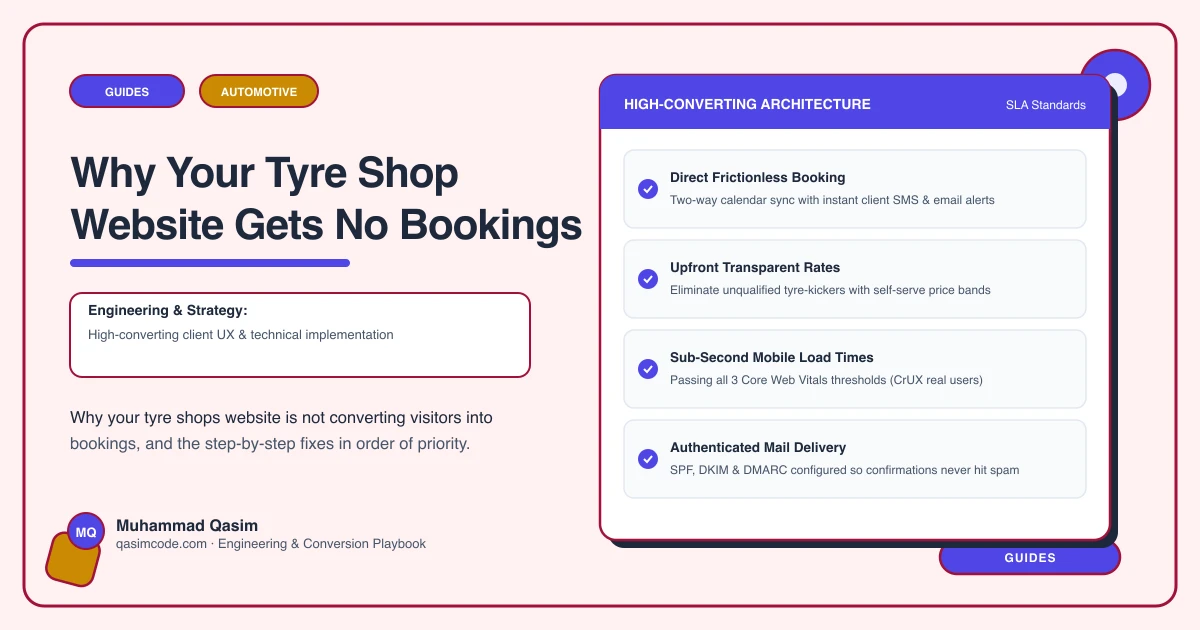
Why Your Tyre Shop Website Gets No Bookings
Why your tyre shops website is not converting visitors into bookings, and the step-by-step fixes in order of priority.
Writing
94 write-ups from production, newest first. Each one is a problem hit on a real project and how it was diagnosed and fixed.
Why your tyre shops website is not converting visitors into bookings, and the step-by-step fixes in order of priority.
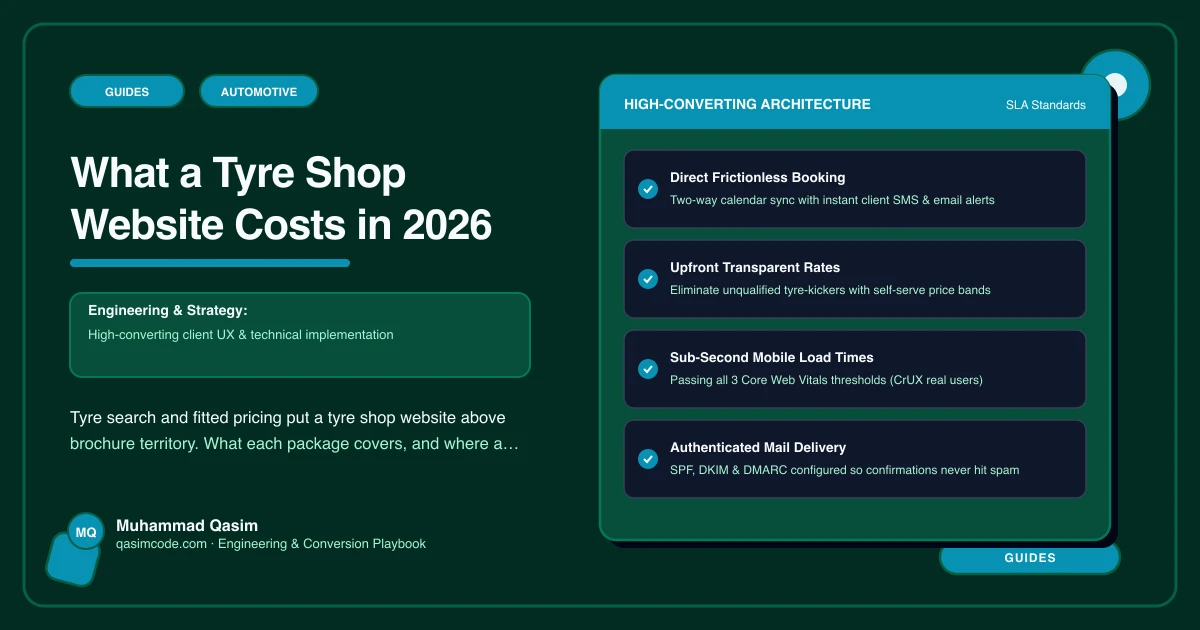
Tyre search and fitted pricing put a tyre shop website above brochure territory. What each package covers, and where a simpler request form saves money.
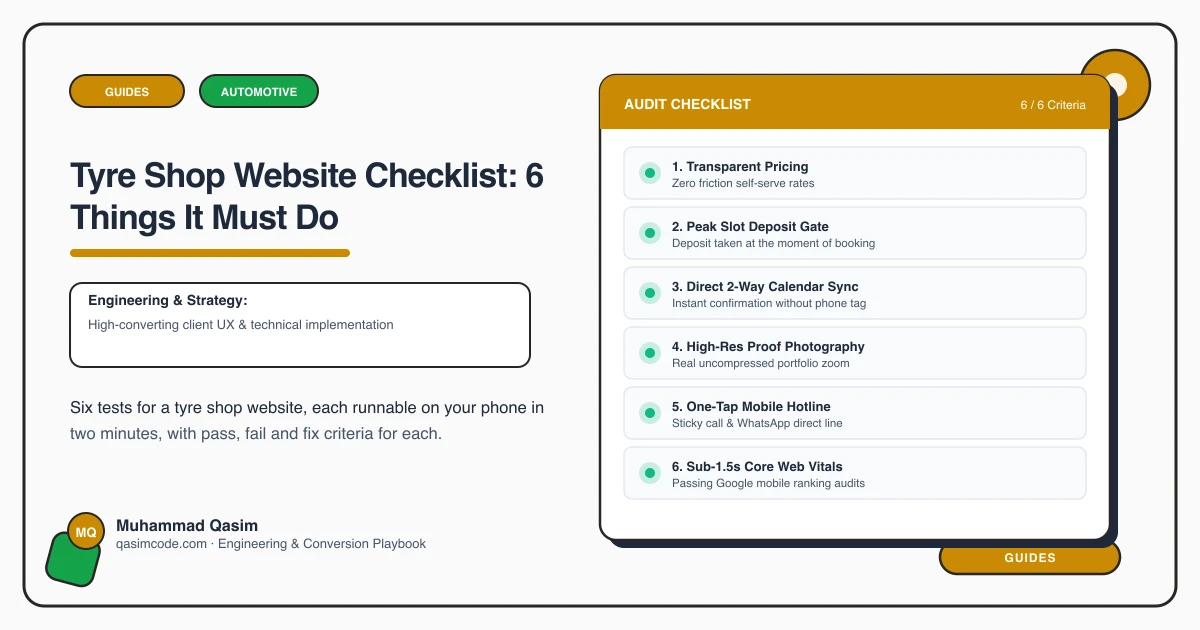
Six tests for a tyre shop website, each runnable on your phone in two minutes, with pass, fail and fix criteria for each.

A tyre booking is a quote and a slot at once. The five platforms tyre shops run, and what to test before you tie your fitting bay to one.
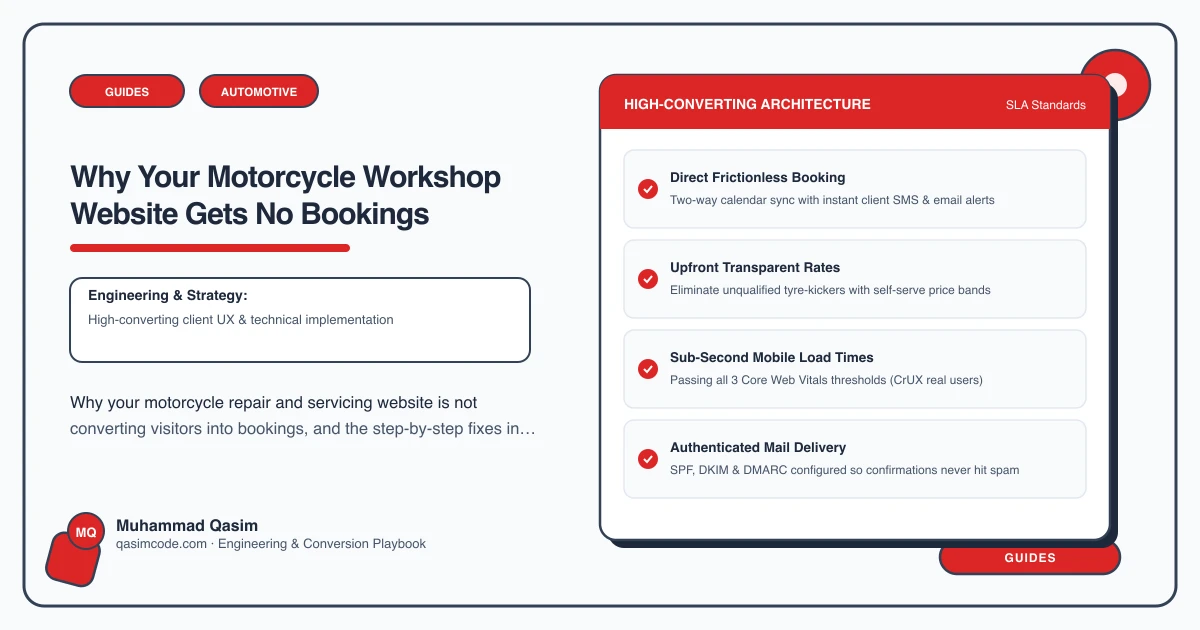
Why your motorcycle repair and servicing website is not converting visitors into bookings, and the step-by-step fixes in order of priority.
Why marque pages drive the cost of a motorcycle workshop website, what each package includes, and what the seasonal work adds to the build.

Six tests for a motorcycle repair and servicing website, each runnable on your phone in two minutes, with pass, fail and fix criteria for each.

Garage platforms or a simple diary? The four systems motorcycle workshops run, and the questions that decide which one fits your size.
Why your MOT, inspection and emissions testing website is not converting visitors into bookings, and the step-by-step fixes in order of priority.
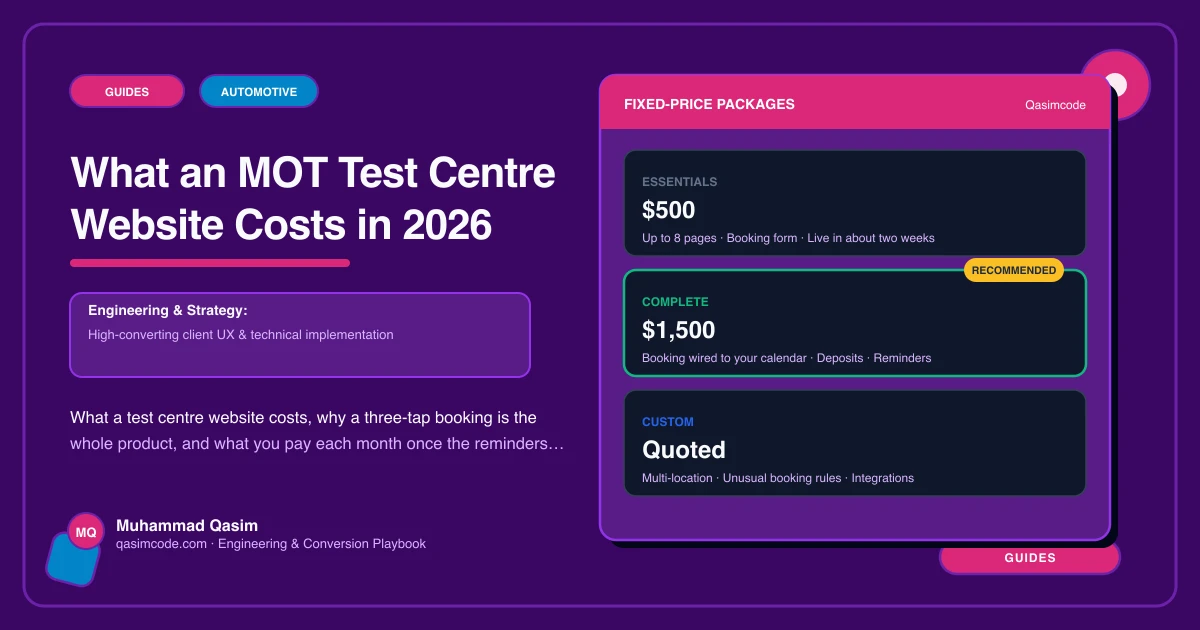
What a test centre website costs, why a three-tap booking is the whole product, and what you pay each month once the reminders are running.

Six tests for an MOT, inspection and emissions testing website, each runnable on your phone in two minutes, with pass, fail and fix criteria for each.
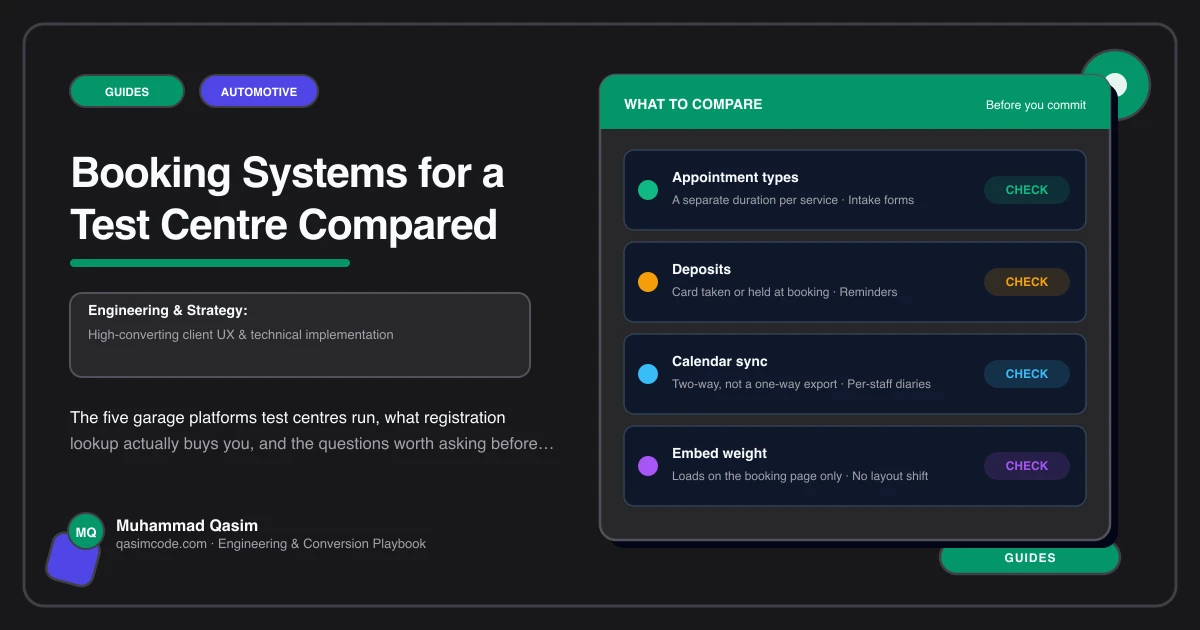
The five garage platforms test centres run, what registration lookup actually buys you, and the questions worth asking before you commit to one.
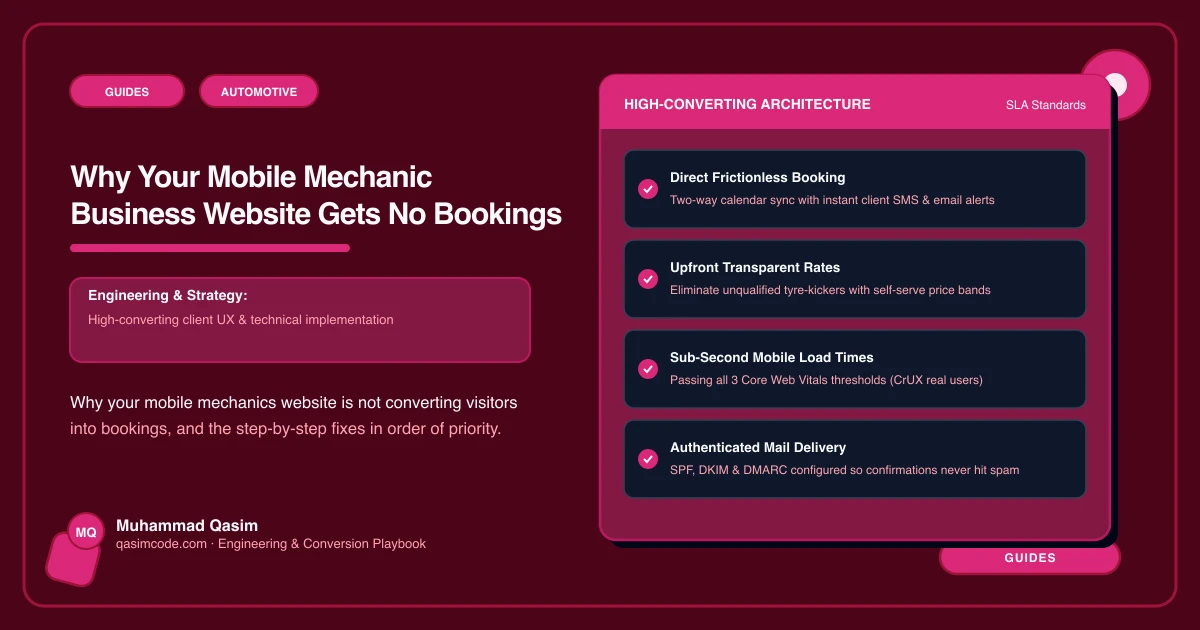
Why your mobile mechanics website is not converting visitors into bookings, and the step-by-step fixes in order of priority.

Why the size of your radius moves a mobile mechanic website quote more than anything else, what each package covers, and the monthly cost after launch.
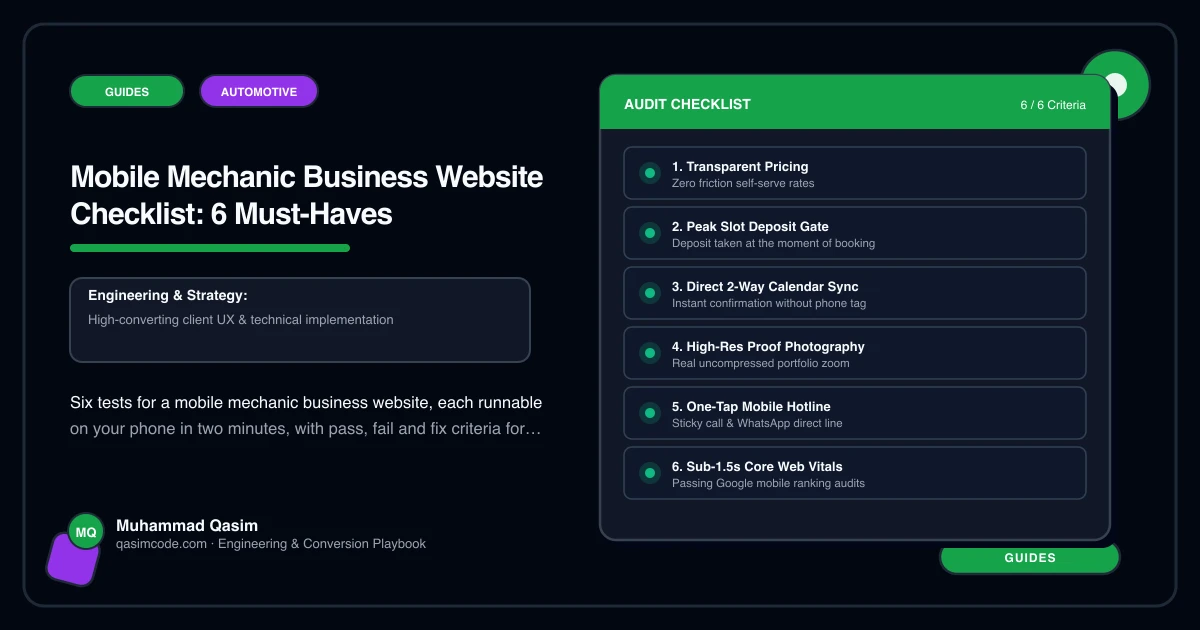
Six tests for a mobile mechanic business website, each runnable on your phone in two minutes, with pass, fail and fix criteria for each.
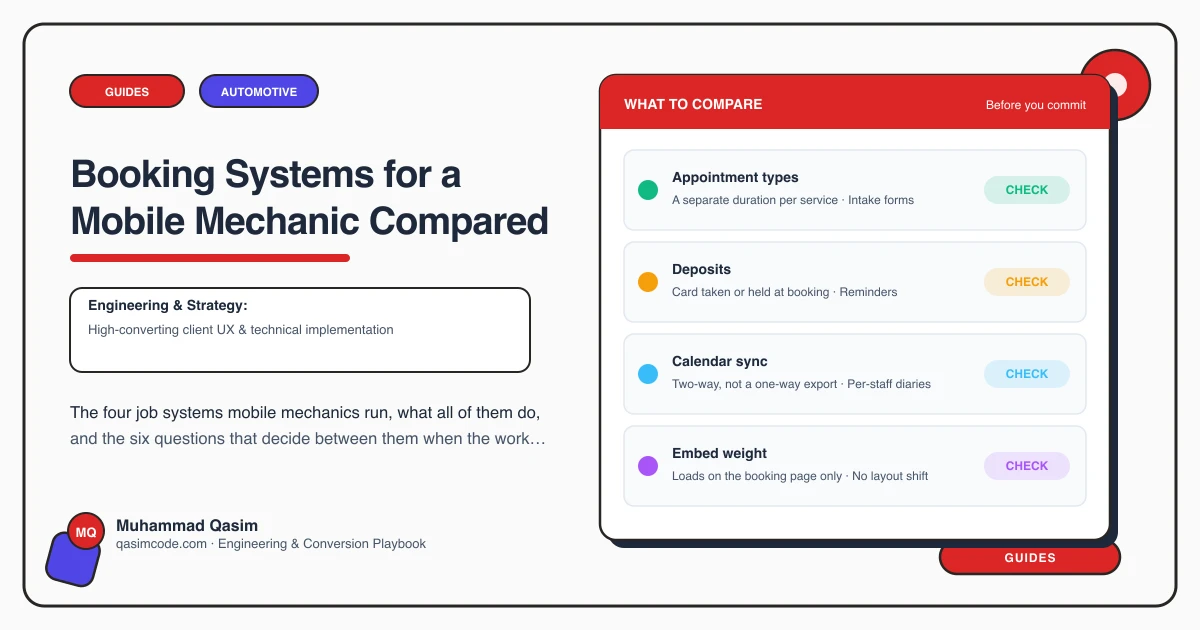
The four job systems mobile mechanics run, what all of them do, and the six questions that decide between them when the work happens on a driveway.
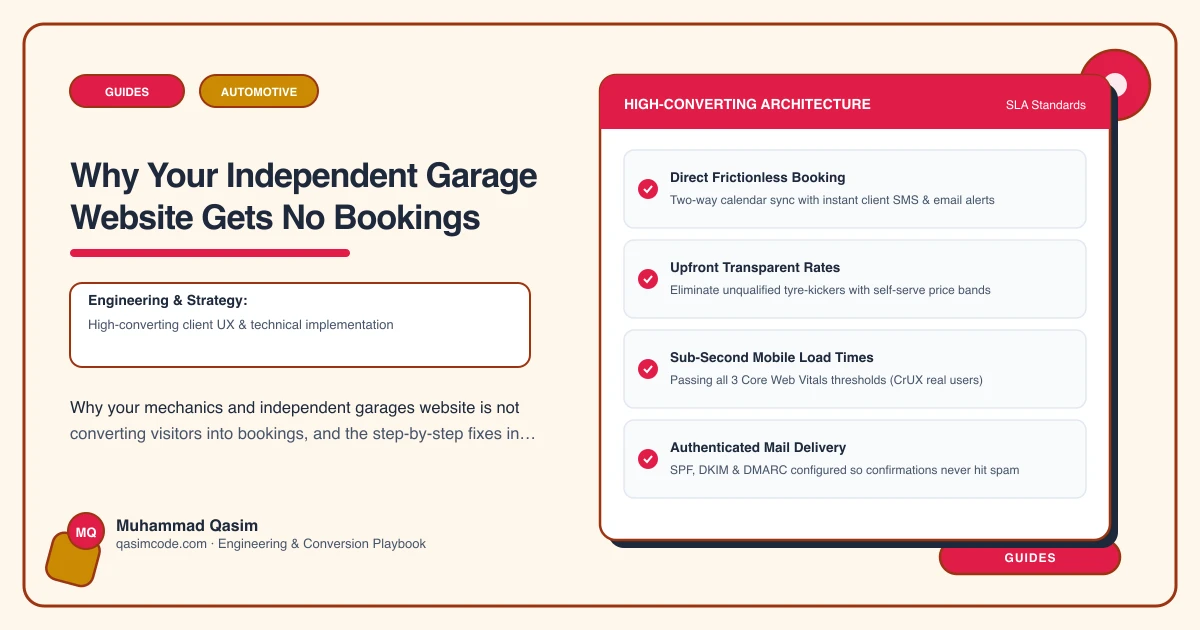
Why your mechanics and independent garages website is not converting visitors into bookings, and the step-by-step fixes in order of priority.
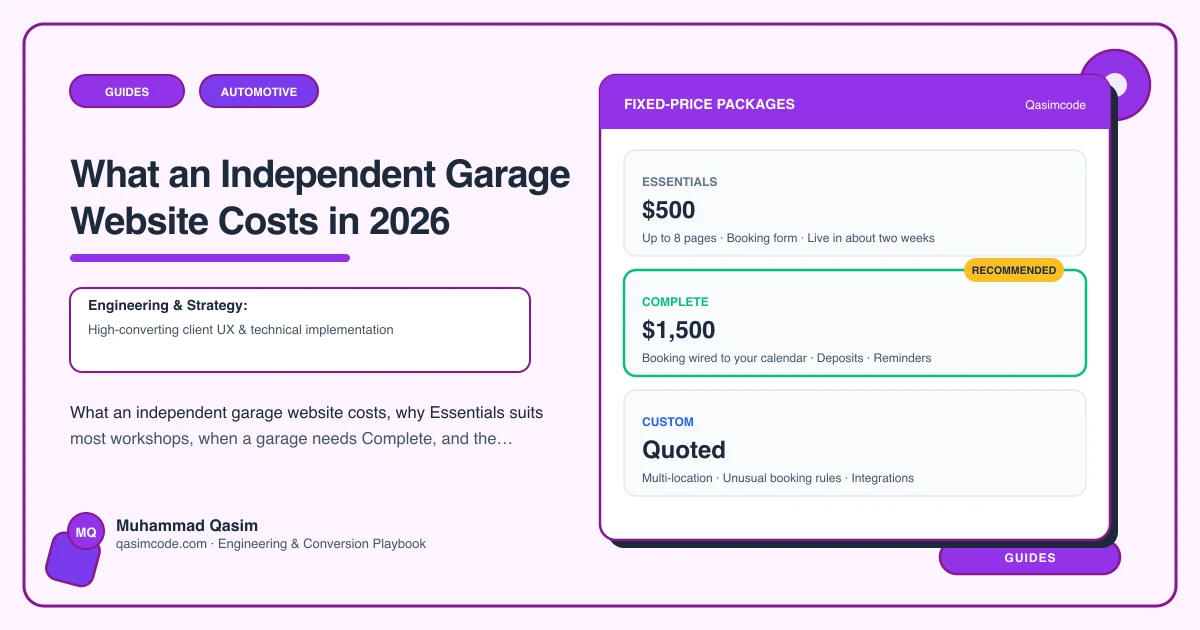
What an independent garage website costs, why Essentials suits most workshops, when a garage needs Complete, and the monthly bill after launch.
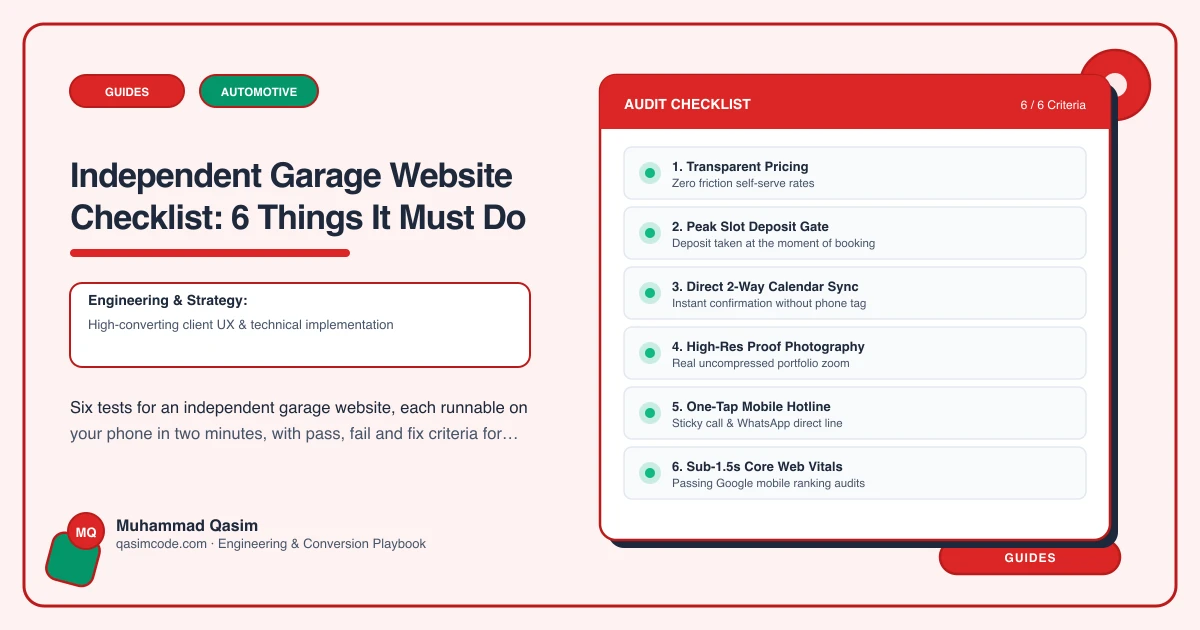
Six tests for an independent garage website, each runnable on your phone in two minutes, with pass, fail and fix criteria for each.

The five garage management systems independent workshops actually run, what all of them do, and the questions to settle on a trial before you commit.
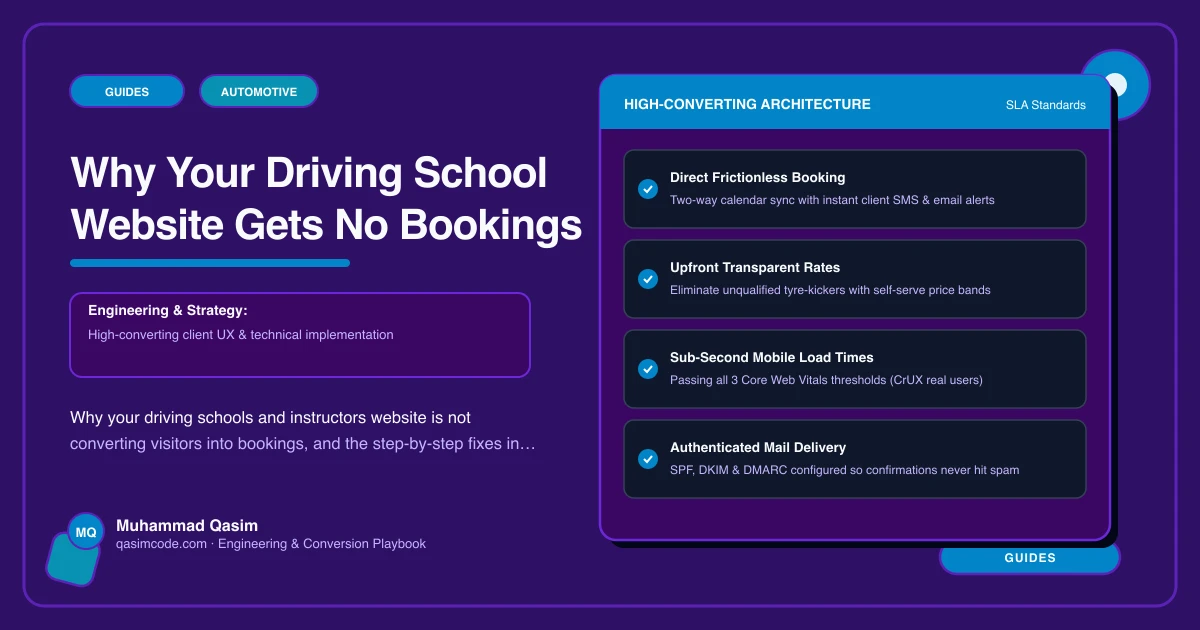
Why your driving schools and instructors website is not converting visitors into bookings, and the step-by-step fixes in order of priority.
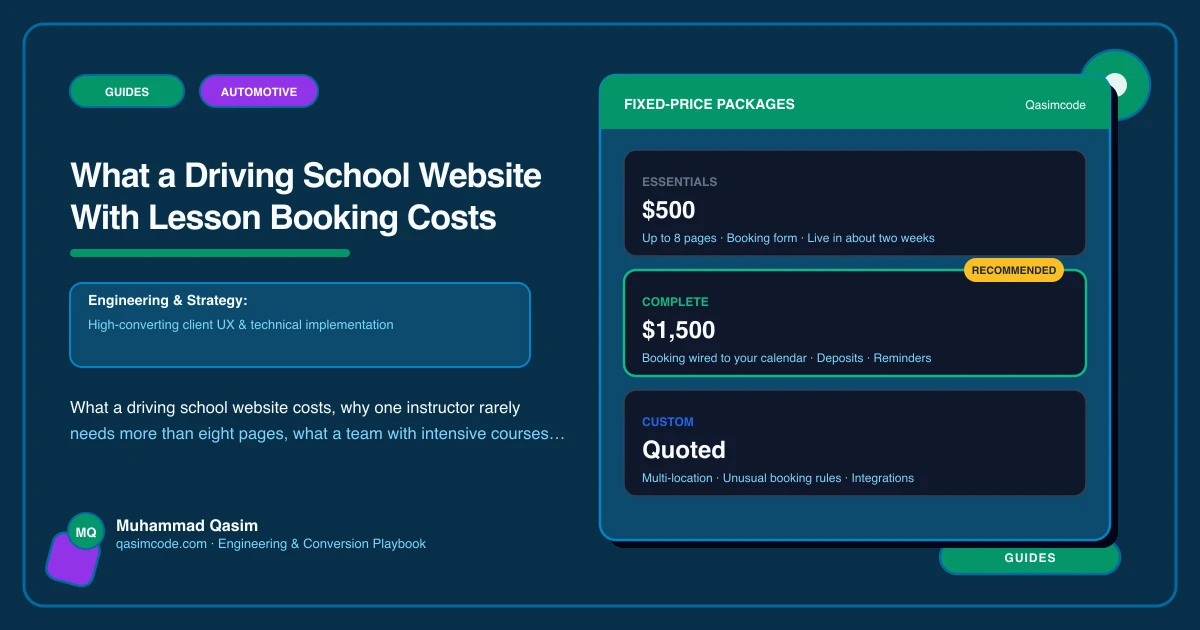
What a driving school website costs, why one instructor rarely needs more than eight pages, what a team with intensive courses adds, and the monthly cost.
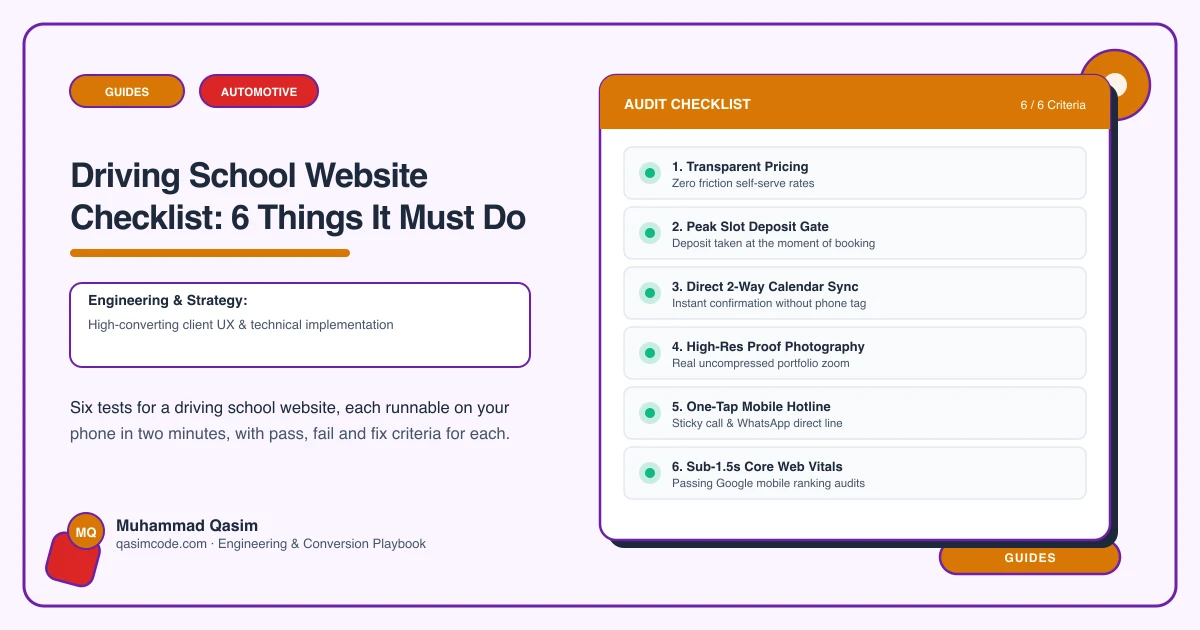
Six tests for a driving school website, each runnable on your phone in two minutes, with pass, fail and fix criteria for each.

The five lesson booking systems driving schools actually run, what every one of them already does, and the questions that decide between them on a trial.
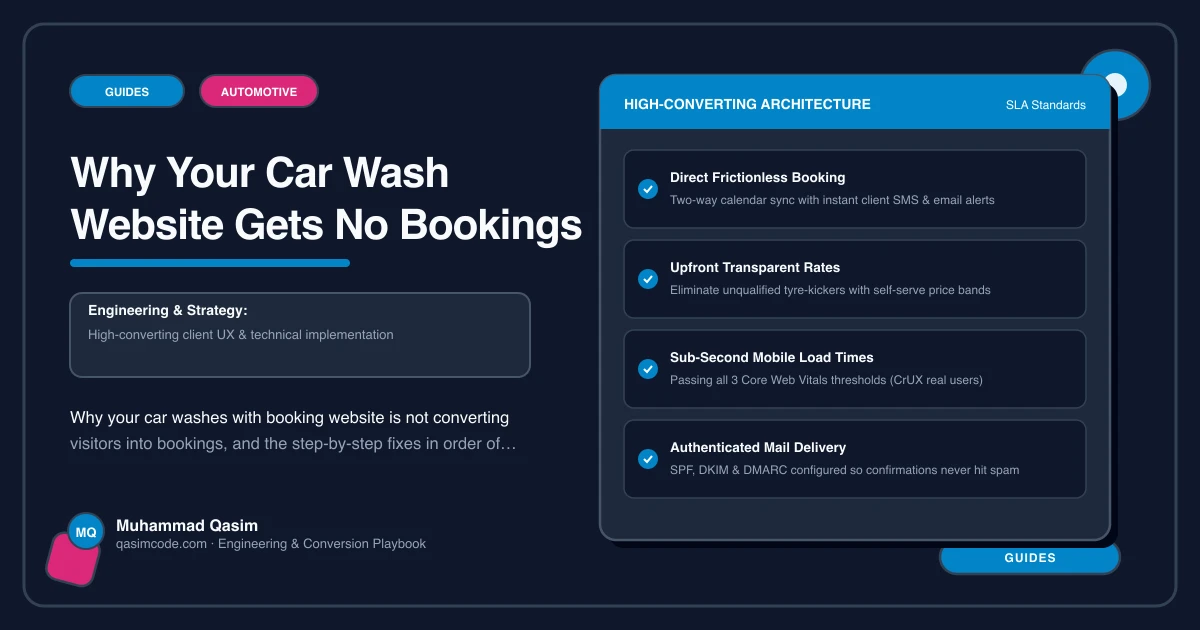
Why your car washes with booking website is not converting visitors into bookings, and the step-by-step fixes in order of priority.
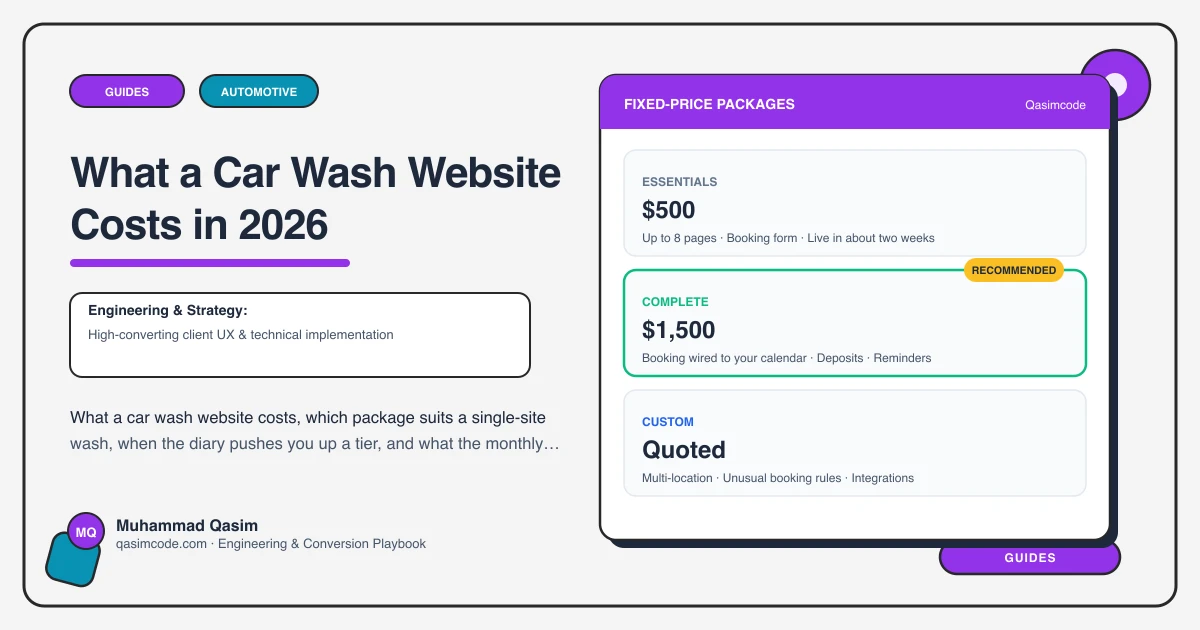
What a car wash website costs, which package suits a single-site wash, when the diary pushes you up a tier, and what the monthly bill looks like.
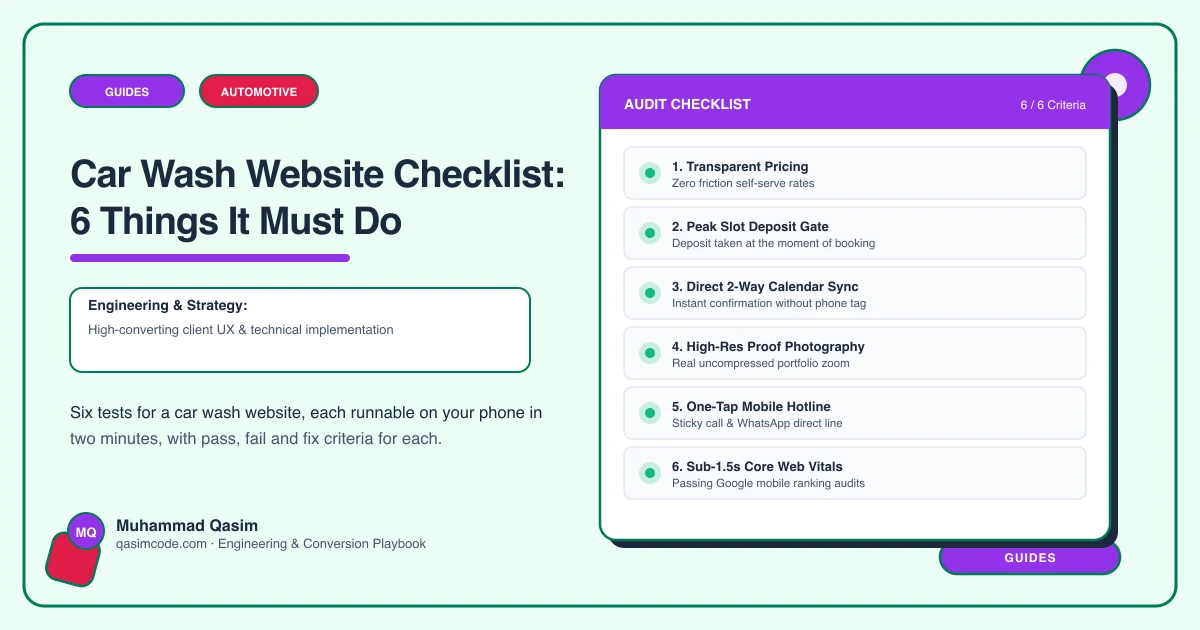
Six tests for a car wash website, each runnable on your phone in two minutes, with pass, fail and fix criteria for each.
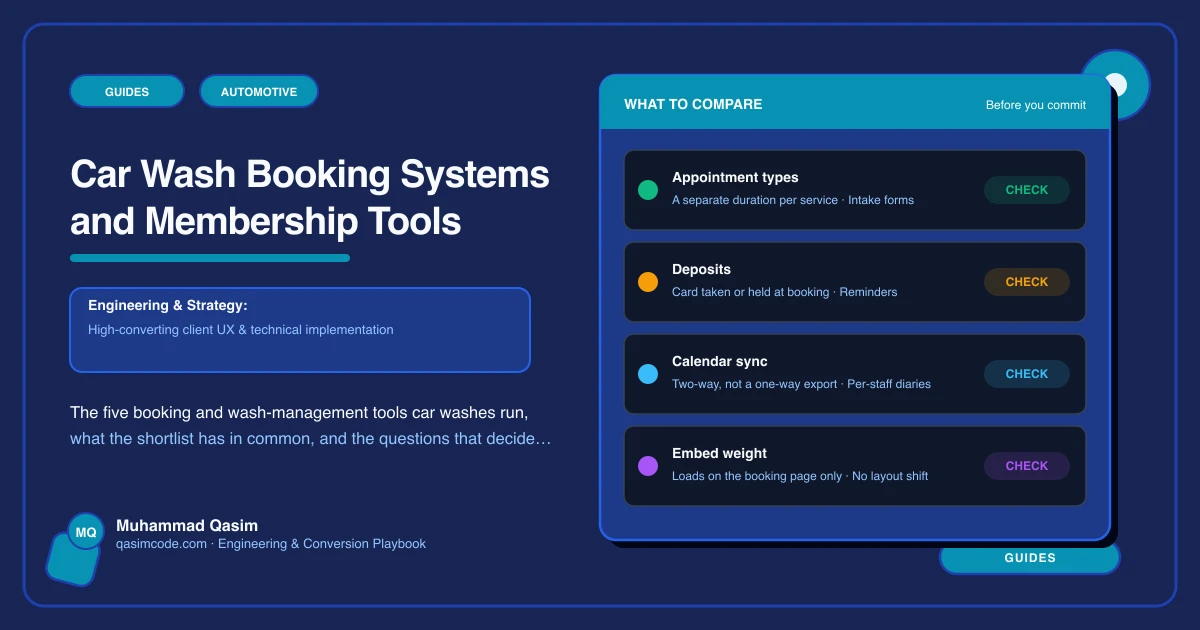
The five booking and wash-management tools car washes run, what the shortlist has in common, and the questions that decide between them on a trial.
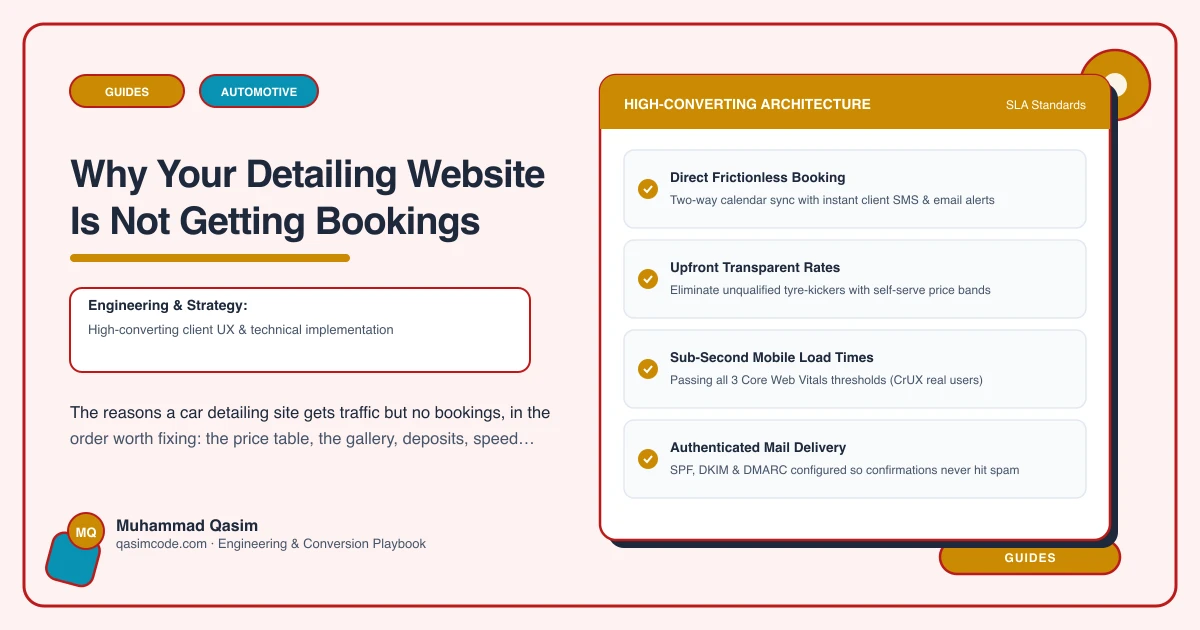
The reasons a car detailing site gets traffic but no bookings, in the order worth fixing: the price table, the gallery, deposits, speed and coverage areas.
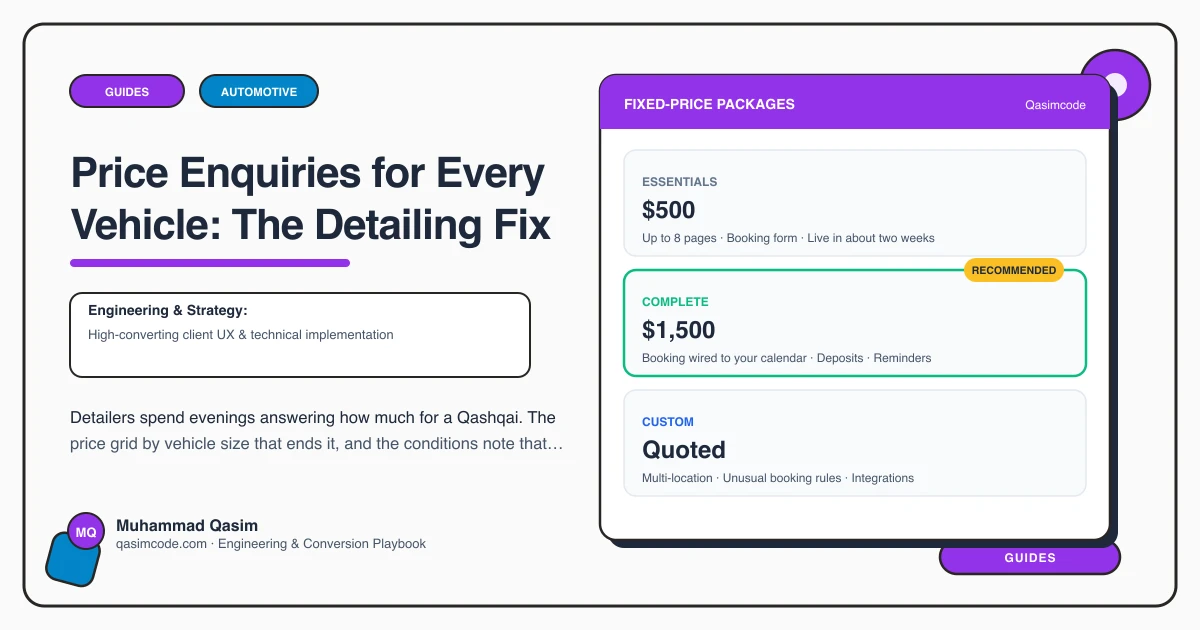
Detailers spend evenings answering how much for a Qashqai. The price grid by vehicle size that ends it, and the conditions note that protects the margin.
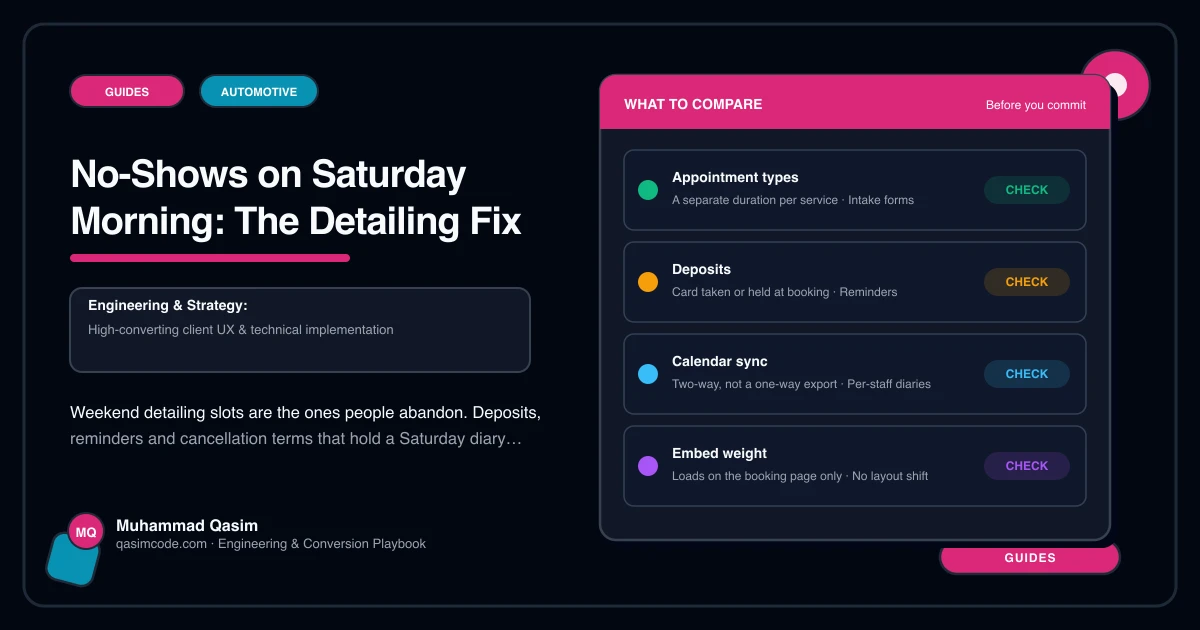
Weekend detailing slots are the ones people abandon. Deposits, reminders and cancellation terms that hold a Saturday diary without losing bookings.
Why a good detailing Instagram produces DMs instead of bookings, and how a site with the price grid and the booking link turns the same audience into a diary.
A template detailing site versus a purpose-built one: what each costs, where the template breaks on the price table and gallery, and when it is right anyway.
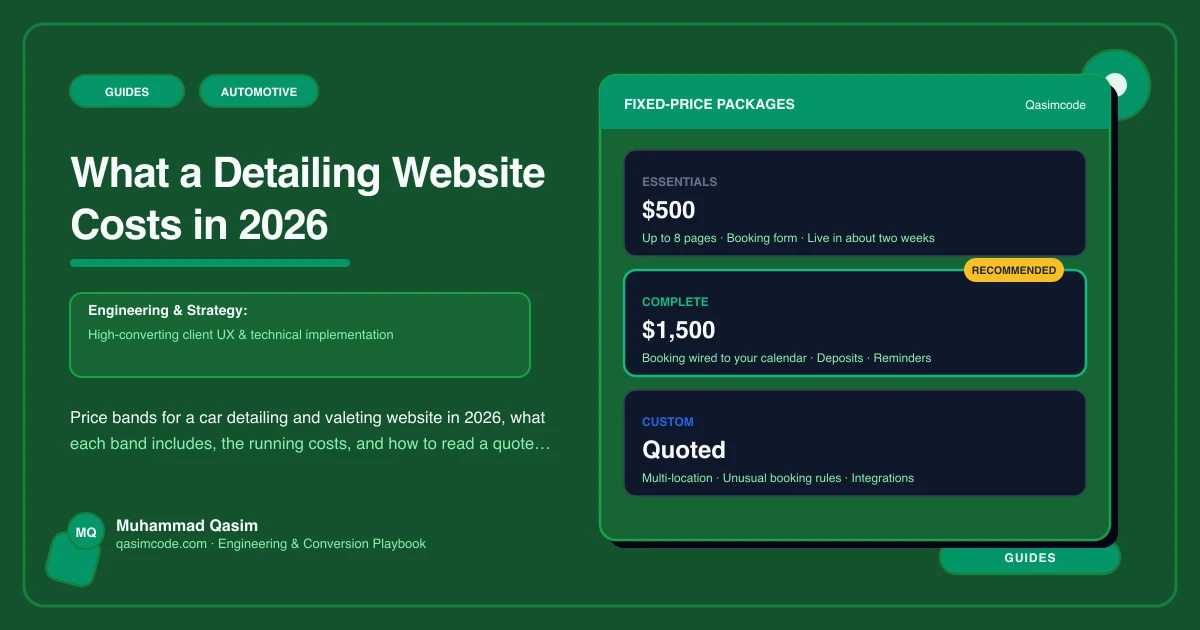
Price bands for a car detailing and valeting website in 2026, what each band includes, the running costs, and how to read a quote you have been sent.
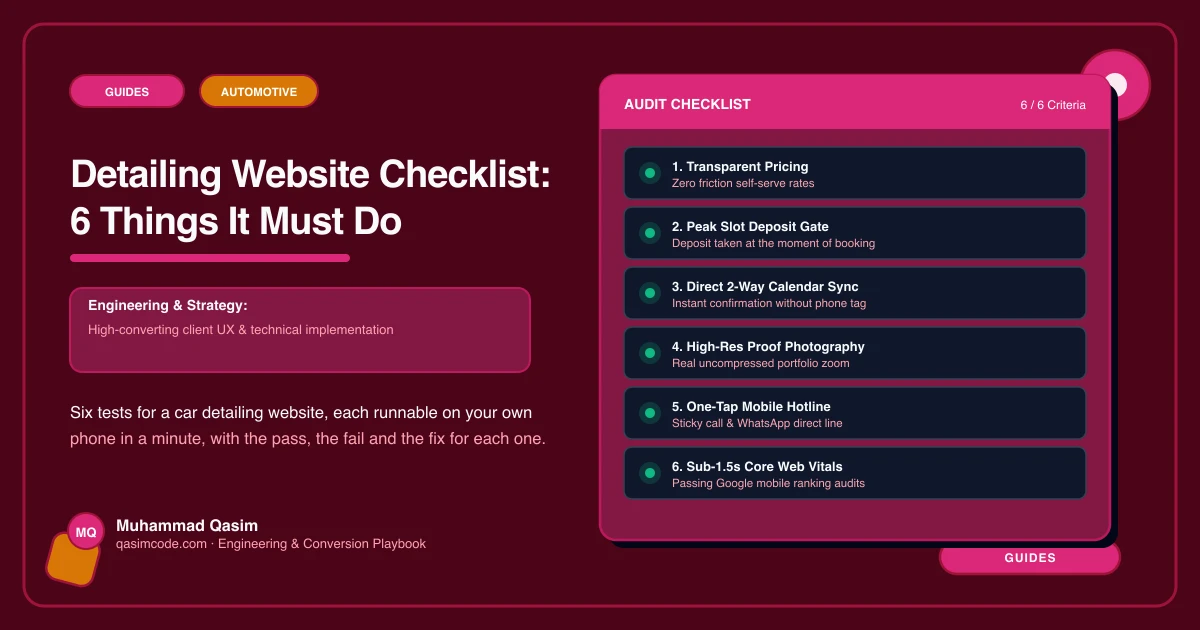
Six tests for a car detailing website, each runnable on your own phone in a minute, with the pass, the fail and the fix for each one.

Not the prettiest detailing sites, the ones with a full diary and deposits taken. The eight traits the best car detailing and valeting sites share in 2026.

Booksy, Fresha, Square Appointments, Acuity and Urable compared for detailers: packages by vehicle size, add-ons, deposits, mobile addresses and embedding.
How to build a detailing gallery that sells the transformation: the four photographs per job, the records model behind it, and how to keep it under two seconds.
The reasons a body shop site gets traffic but no estimate requests, in the order worth fixing: the form, the gallery, the insurance answer and speed.

The direct answer for body shops: why smart repair and paintless dent removal need their own pages with prices, and how those pages bring in the easiest work.

Step by step: building the body shop estimate form so four photos and a registration reach a job record from a phone, and same-day estimates become normal.
The direct answer for body shops: how to explain the claim-or-pay decision on your website, the arithmetic to publish, and why it brings you better work.
Building the claim-or-pay page on a body shop website: the six questions, the arithmetic to show, the wording that keeps you safe, and where to link it.
The direct answer for body shops: the four photographs per job that prove a finish, and the guarantee page that turns the gallery into a reason to choose you.

Building the page that settles the finish question on a body shop website: paint codes, blending, difficult colours, the guarantee, and what to put in writing.
Body shop estimates stall because nobody can price damage they cannot see. How a photo estimate form gets a same-day figure out without the car coming in.
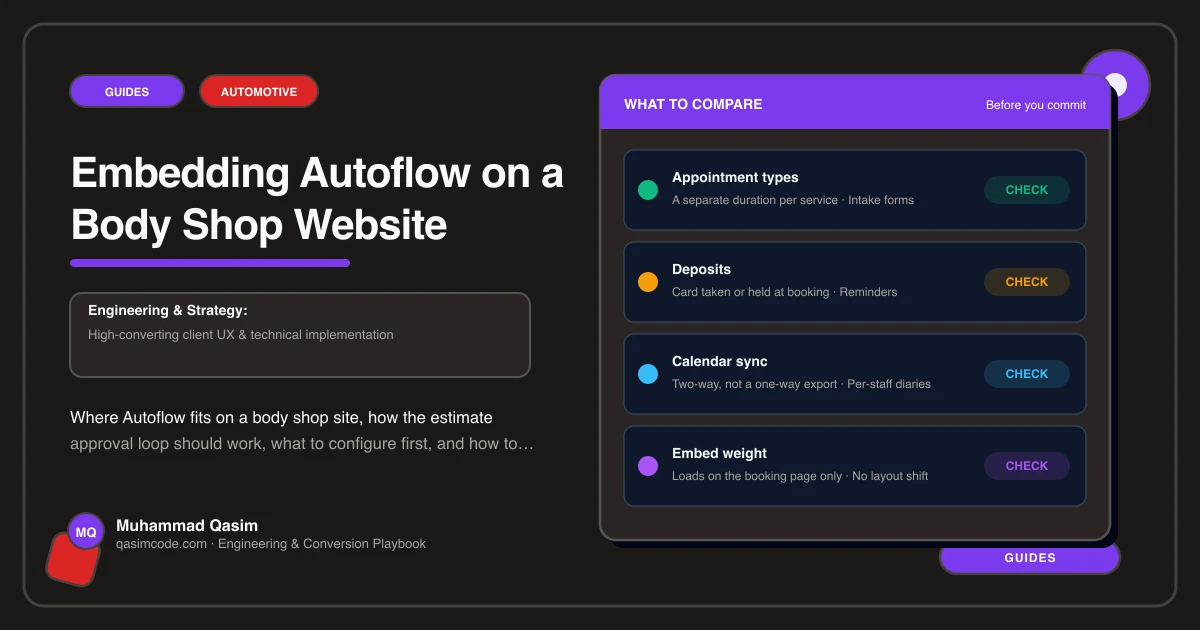
Where Autoflow fits on a body shop site, how the estimate approval loop should work, what to configure first, and how to keep the gallery pages fast.
The real fear is not price, it is that the repair will be visible forever. The close-up photography and guarantee page that settle it before the estimate.
Customers claim when they should not, and pay when they should claim. The page that explains excess honestly and wins the private work worth having.
The direct answer for body shops: what four photographs and a registration tell you, what they cannot, and the promise that makes photo estimating work.
A template body shop site versus a purpose-built one: what each costs, where the template breaks on estimates and galleries, and when it is still right.
What a body shop website costs, why the estimate flow and repair pages push it past eight pages, and the five things that move the number for this trade.
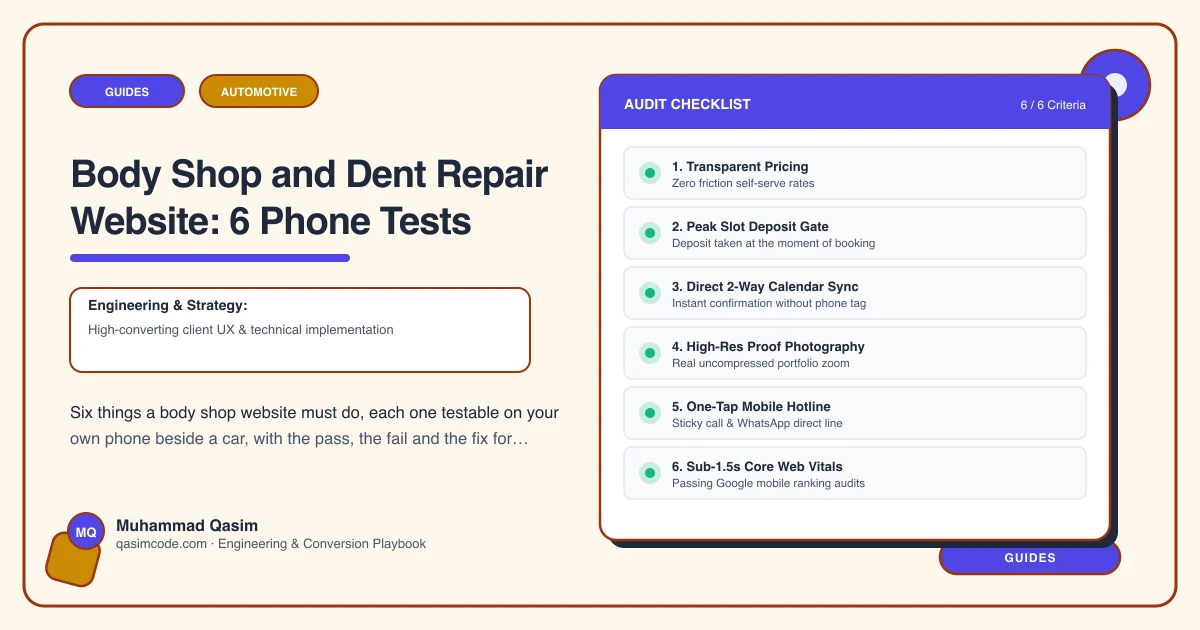
Six things a body shop website must do, each one testable on your own phone beside a car, with the pass, the fail and the fix for every test.
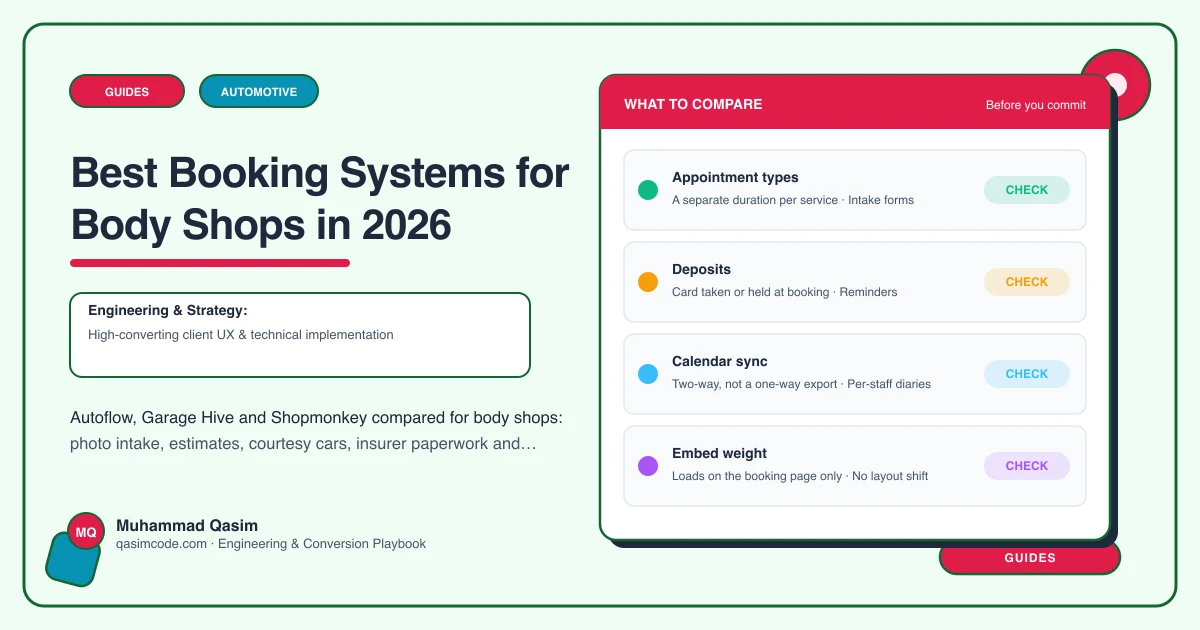
Autoflow, Garage Hive and Shopmonkey compared for body shops: photo intake, estimates, courtesy cars, insurer paperwork and embedding on your own website.
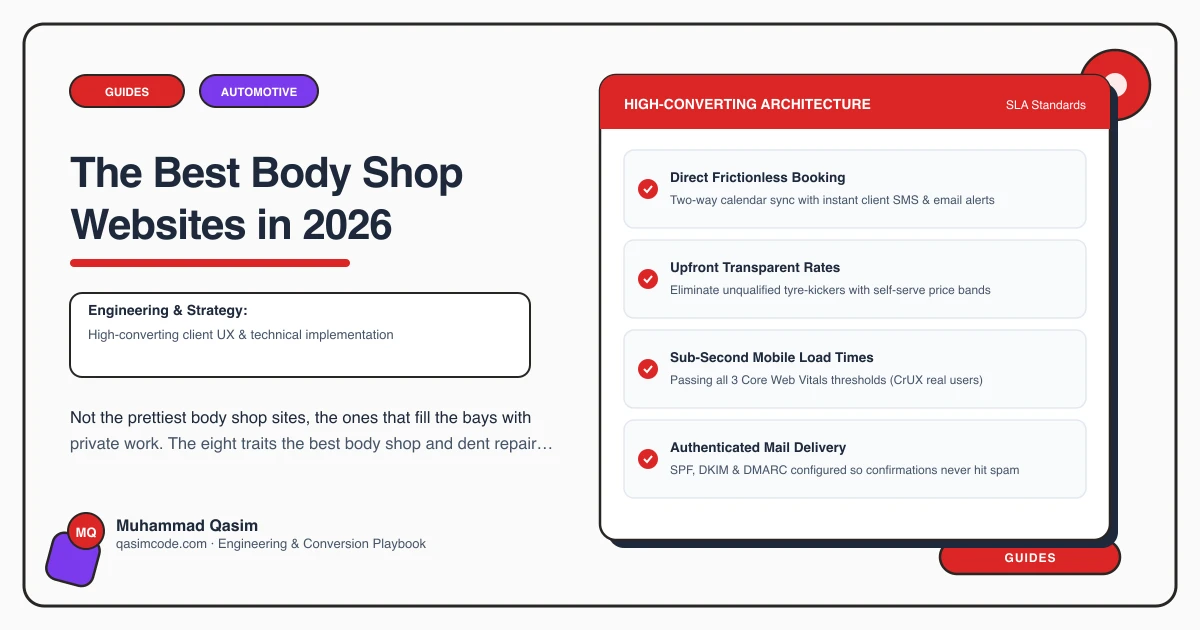
Not the prettiest body shop sites, the ones that fill the bays with private work. The eight traits the best body shop and dent repair sites share in 2026.
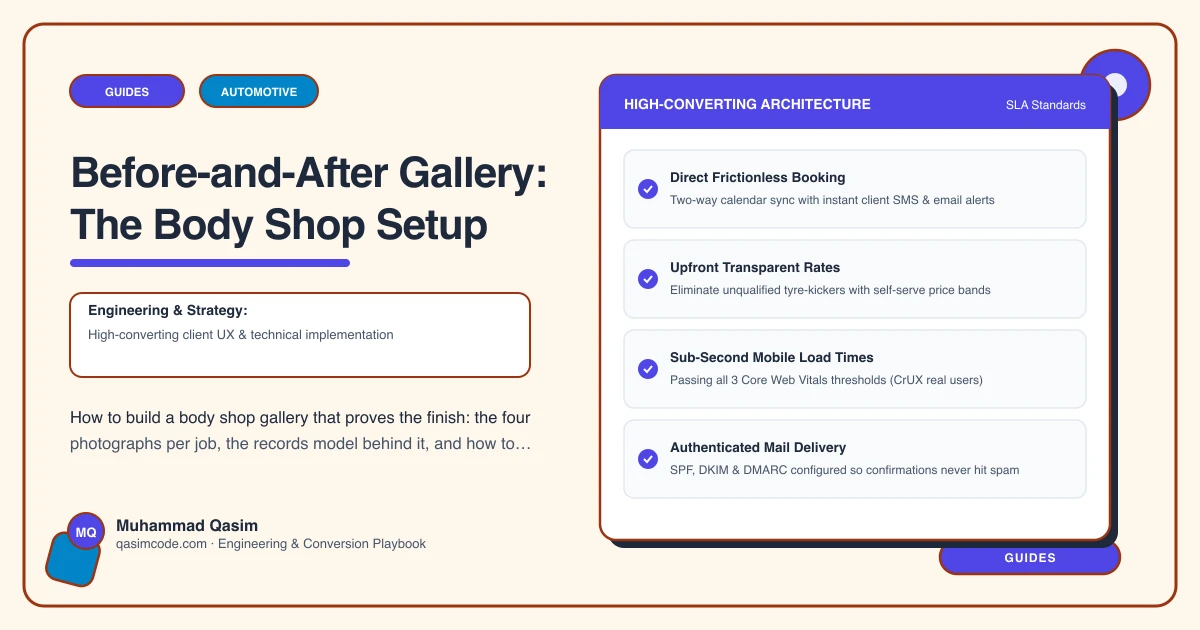
How to build a body shop gallery that proves the finish: the four photographs per job, the records model behind it, and how to keep the page under two seconds.
The reasons a windscreen repair site gets traffic but no quote requests, in the order worth fixing: the form, the insurance answer, speed and coverage areas.
The direct answer for auto glass businesses: what to say about camera recalibration, whether to state it is included, and the trade work it brings.
Drivers now ask about ADAS before they book a windscreen. The plain-English page that answers it, says whether you do it in-house, and wins the job.
Step by step: building the auto glass quote form so a driver in a car park sends two photos and a registration in under a minute, straight into your system.
The direct answer for auto glass businesses: how to present mobile and workshop fitting, what conditions to state, and how the booking should differ.
How to set up an auto glass site so mobile and workshop customers get different paths: coverage pages, address capture, slot windows and what to state up front.
How to build the insurance page on a windscreen repair site: the six questions to answer, the wording that keeps you safe, and where to link it from.
Drivers stall on windscreen work because they do not know whether to claim. The page that answers excess, direct billing and choice of fitter, and wins the job.
The direct answer for auto glass businesses: what the insurance page must say about excess, direct billing and choice of fitter, and how to word it safely.
Windscreen quotes stall because nobody can price damage they cannot see. How an auto glass site collects the photo, registration and scale for a same-day price.
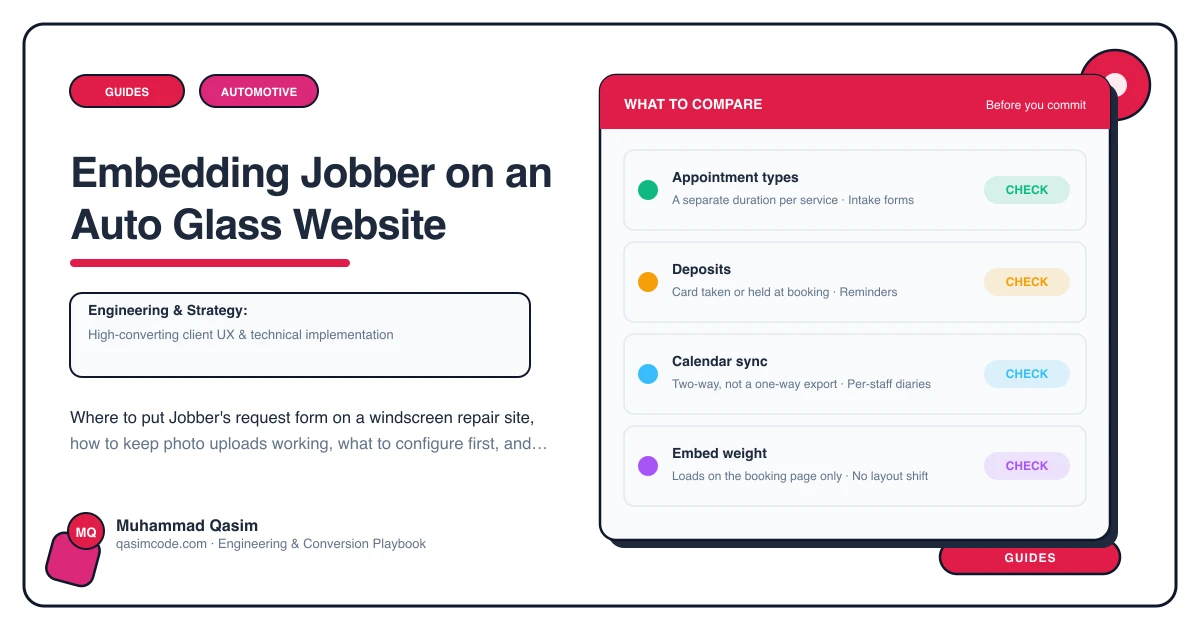
Where to put Jobber's request form on a windscreen repair site, how to keep photo uploads working, what to configure first, and how to keep the pages fast.
The direct answer for auto glass businesses: what a photo and a registration tell you, which jobs still need eyes on them, and how to build the form.
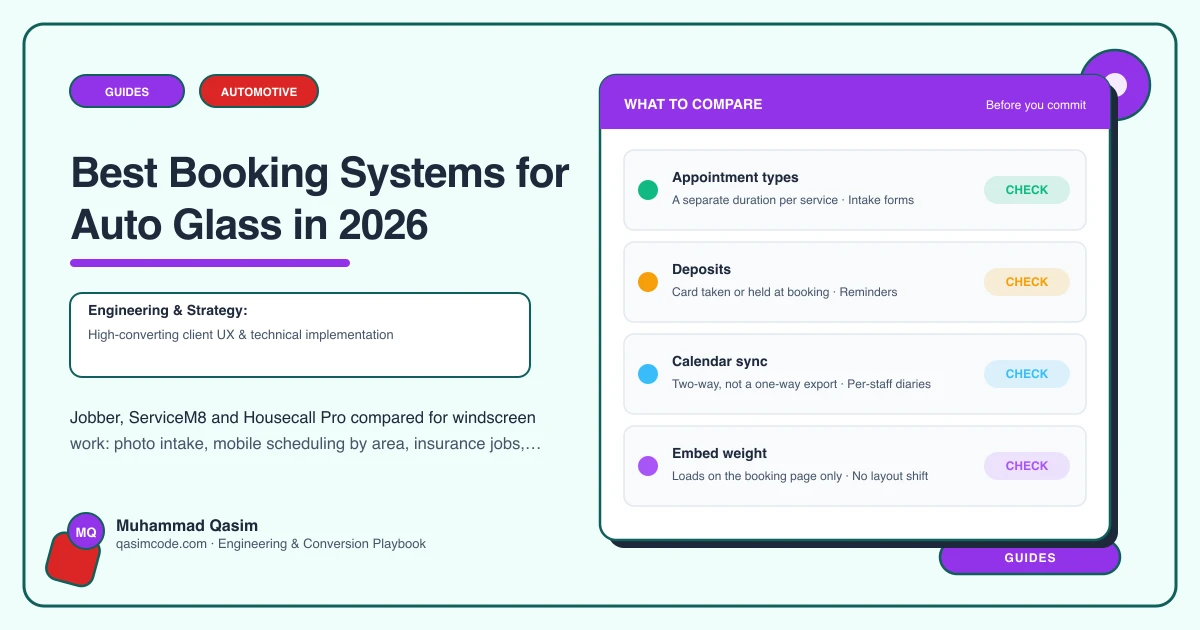
Jobber, ServiceM8 and Housecall Pro compared for windscreen work: photo intake, mobile scheduling by area, insurance jobs, and embedding on your own site.
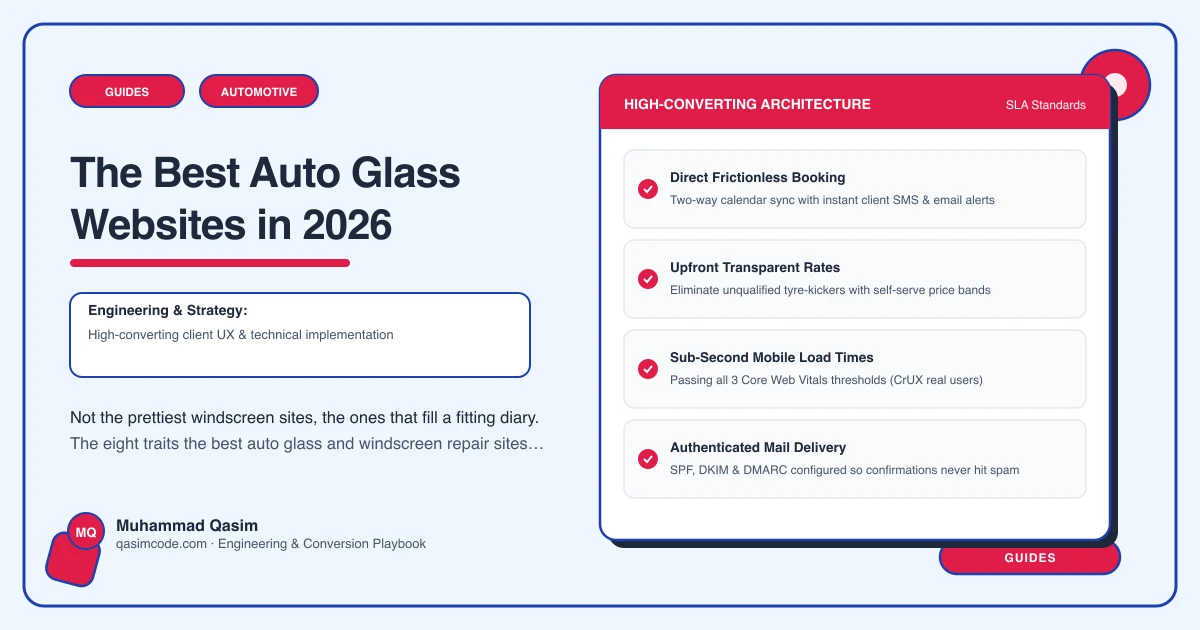
Not the prettiest windscreen sites, the ones that fill a fitting diary. The eight traits the best auto glass and windscreen repair sites share in 2026.
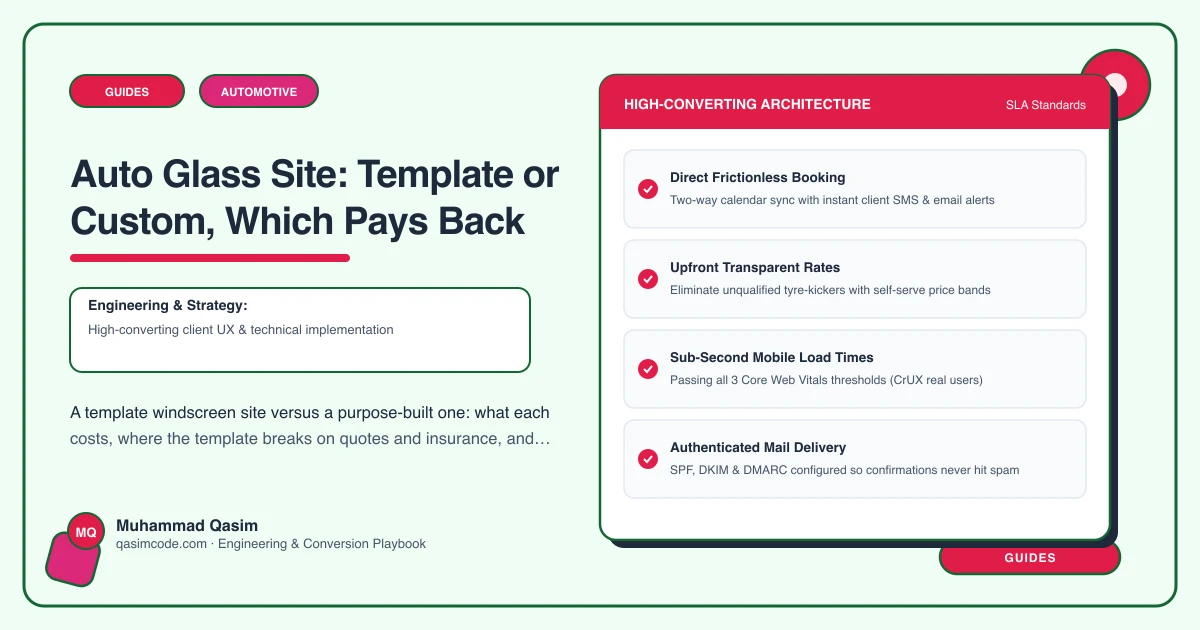
A template windscreen site versus a purpose-built one: what each costs, where the template breaks on quotes and insurance, and when it is the right call anyway.

Price bands for an auto glass and windscreen repair website in 2026, what each band includes, the running costs, and how to read a quote you have been sent.

Six tests for a windscreen repair website, each runnable on your own phone in a minute, with the pass, the fail and the fix for each one.
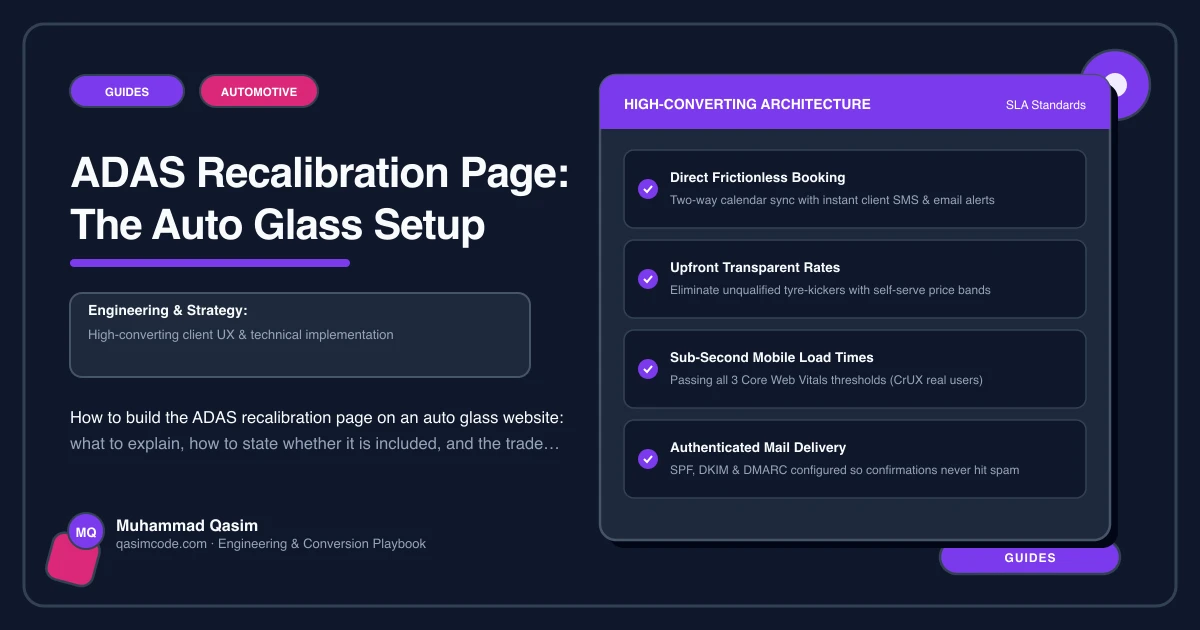
How to build the ADAS recalibration page on an auto glass website: what to explain, how to state whether it is included, and the trade traffic it brings in.
Drivers visit and still phone to ask the price, or book with the chain. The eight reasons a garage, MOT centre, tyre shop or detailer website fails to convert.

How a garage website proves it is the honest one: accreditations linked to registers, real workshop and team photos, Google reviews, and a plain quoting page.

How to put registration-lookup booking on a garage website: choosing the tool, the service menu, embedding and deep-linking, the fields, reminders and tracking.
The nine pages an automotive business website needs, from Book online to Reviews, what each must contain, and how to build them in stages without a developer.
The honest garage looks like every other garage. What a website does about it: open prices, linked accreditations, real people, reviews, a quoting page.
Two answers: fixed-price menus for services, brakes, tyres and MOTs, and a fault form with photos and a call-back for everything else.
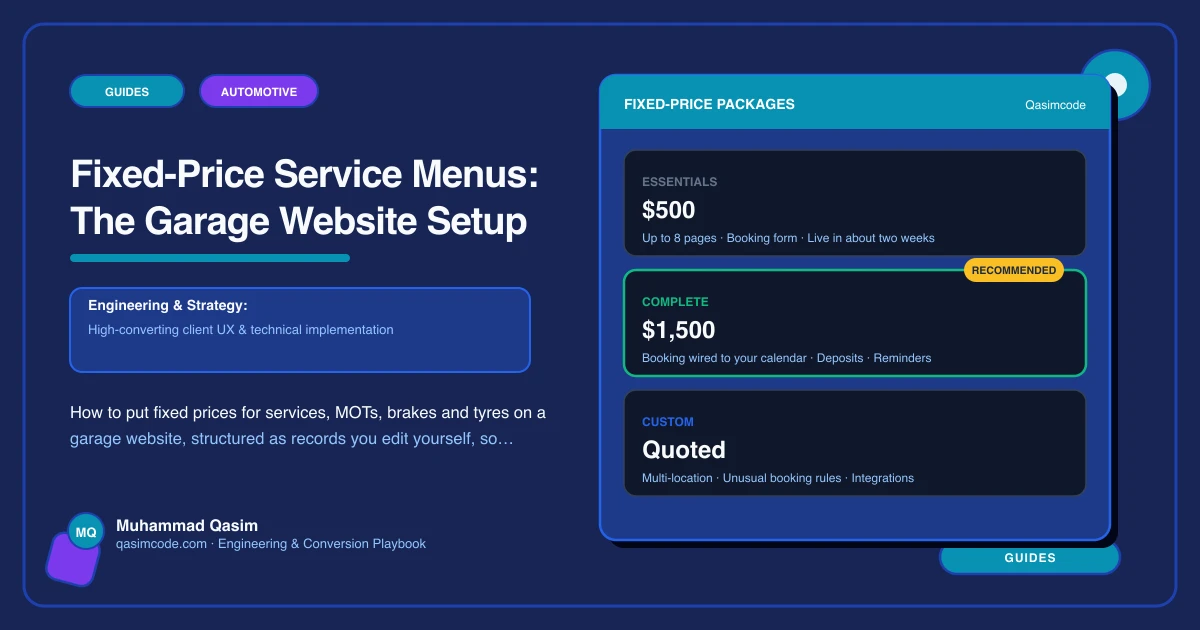
How to put fixed prices for services, MOTs, brakes and tyres on a garage website, structured as records you edit yourself, so drivers stop assuming the worst.
How to build the fault form on a garage website: registration, symptoms, photos, a sound described, and a call-back slot, wired to your workshop software.
A noise, a light, a leak: the driver wants a price and you cannot give one. How a garage website takes the fault with photos, symptoms and a call-back slot.

How to put Autoflow's online booking on a garage website so drivers book a service or MOT from the registration, and the site still loads fast.
Yes. Why the automotive category includes driving instructors, detailers, tyre shops, body shops and glass repairers, and why each gets its own sub-page.

Drivers cannot judge the work, so they assume the worst. How a garage website answers the overcharging fear with stated prices, a quoting page and real people.
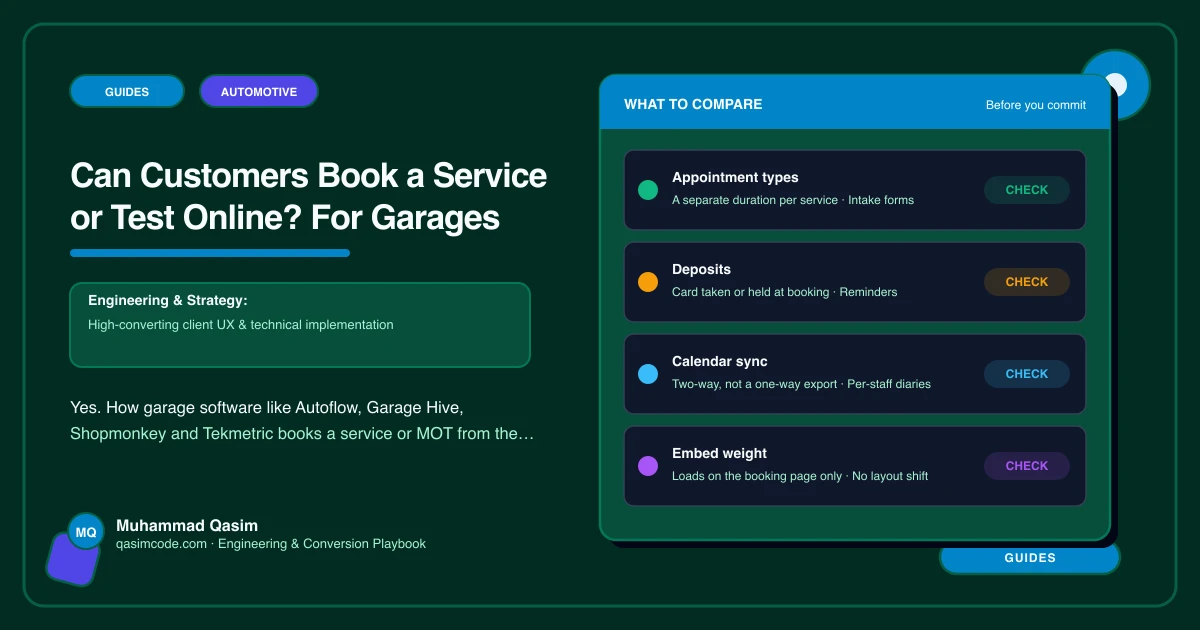
Yes. How garage software like Autoflow, Garage Hive, Shopmonkey and Tekmetric books a service or MOT from the registration, and what to do when yours cannot.

The phone rings while a technician is under a car. How a garage website takes the booking with the registration, the service and a slot, and what changes.
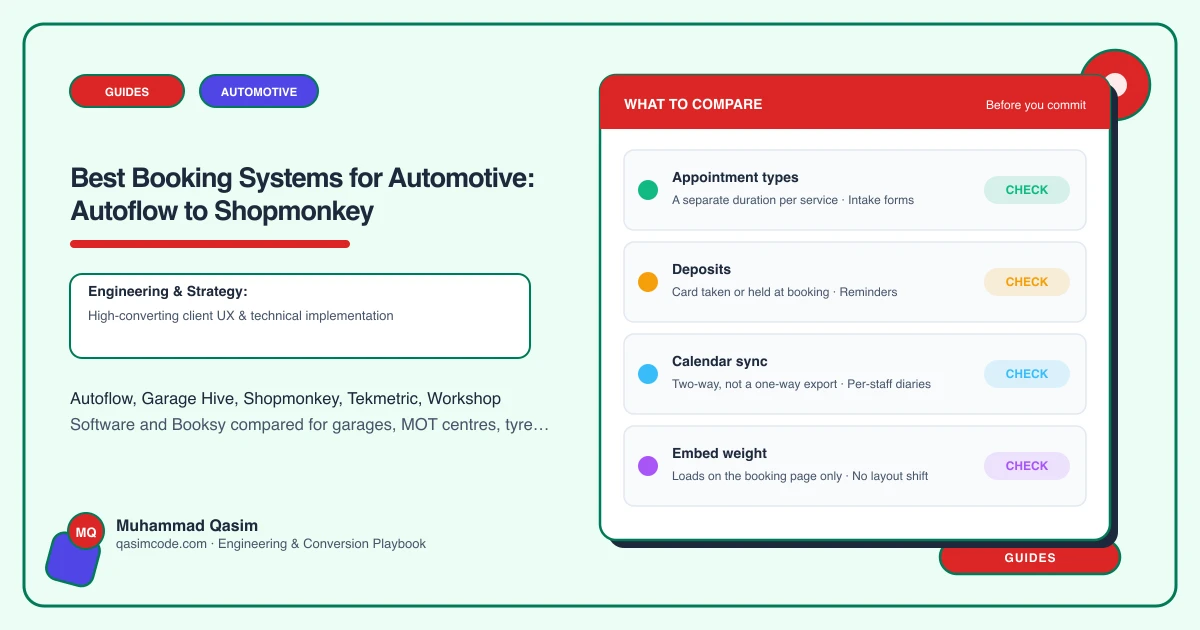
Autoflow, Garage Hive, Shopmonkey, Tekmetric, Workshop Software and Booksy compared for garages, MOT centres, tyre shops and detailers on what a website needs.
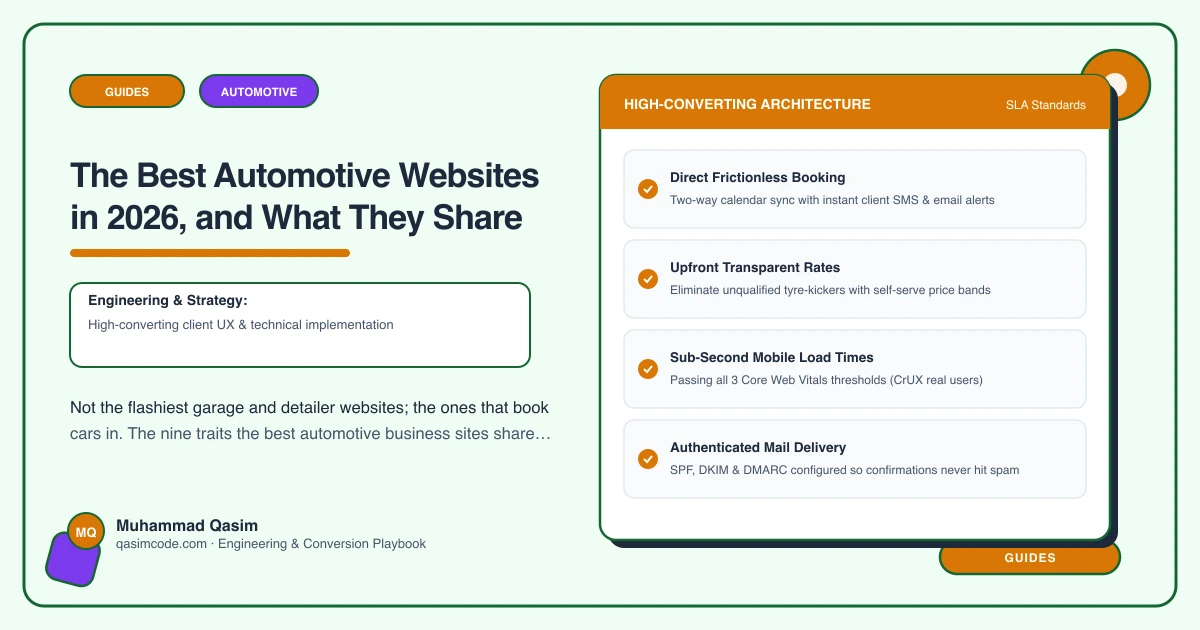
Not the flashiest garage and detailer websites; the ones that book cars in. The nine traits the best automotive business sites share in 2026.
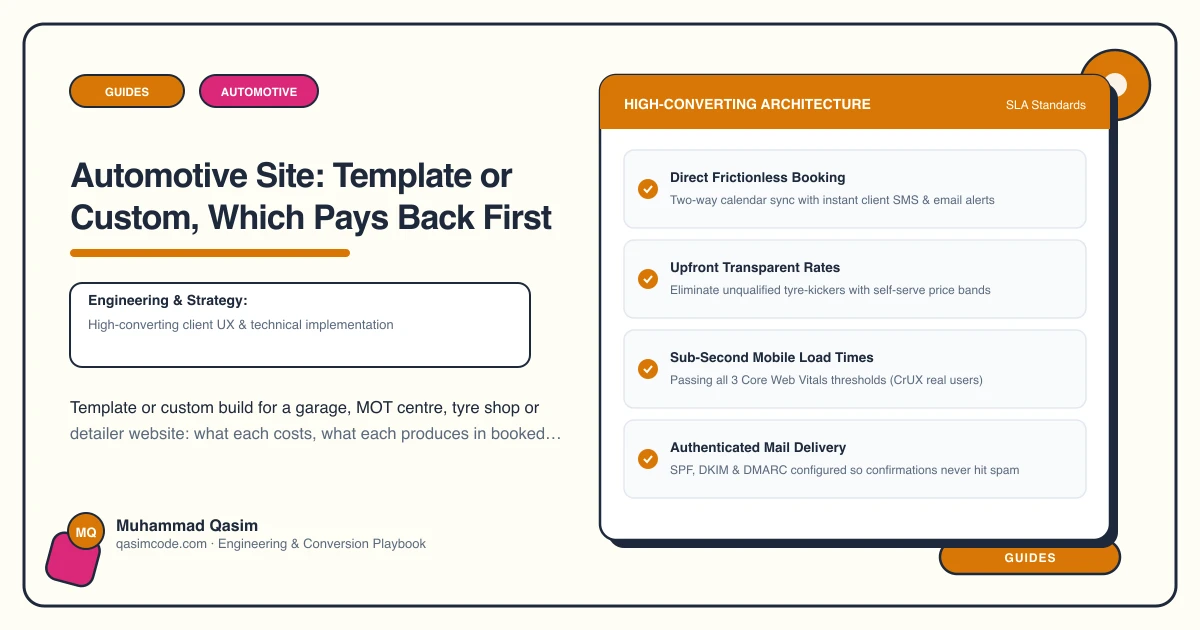
Template or custom build for a garage, MOT centre, tyre shop or detailer website: what each costs, what each produces in booked cars.
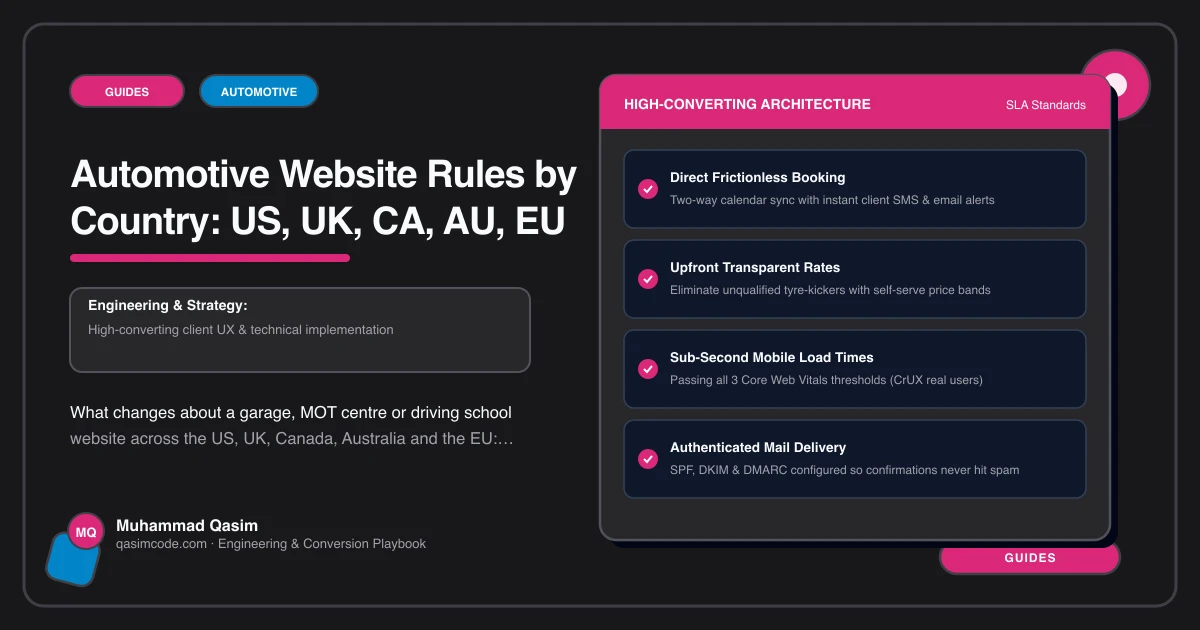
What changes about a garage, MOT centre or driving school website across the US, UK, Canada, Australia and the EU: licences, estimates, prices, privacy.
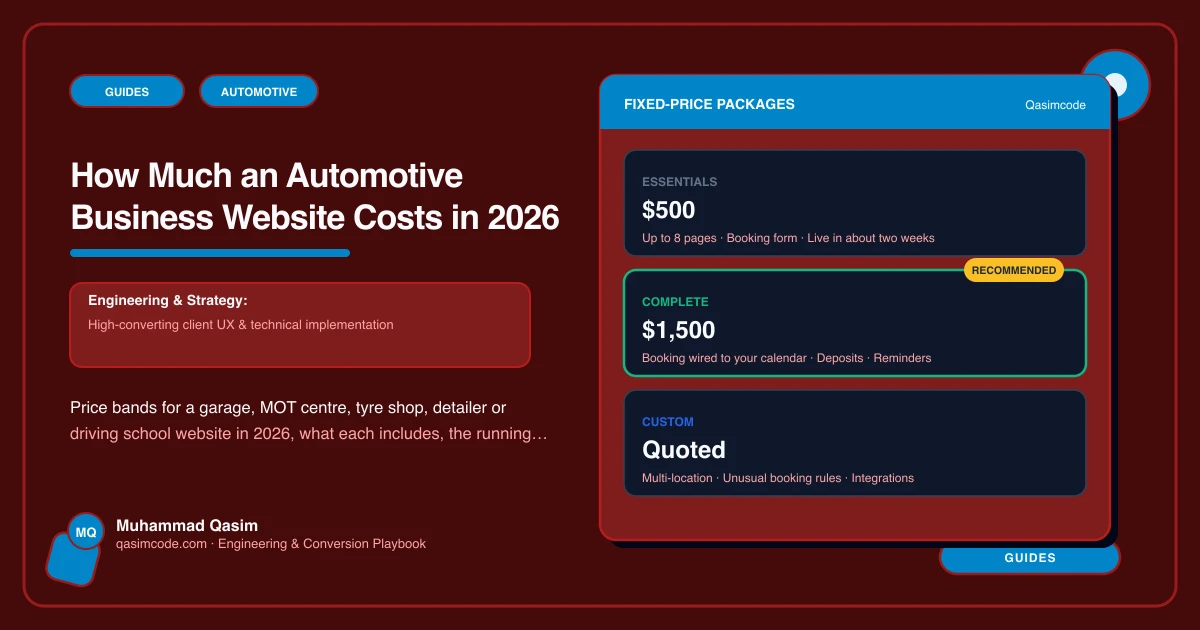
Price bands for a garage, MOT centre, tyre shop, detailer or driving school website in 2026, what each includes, the running costs after launch.

Six tests for a garage, MOT centre, tyre shop or detailer website, each runnable on your own phone in a minute, with the fix for each fail.